Find your registry · 250 countries and territories
How do I find my bone marrow registry?
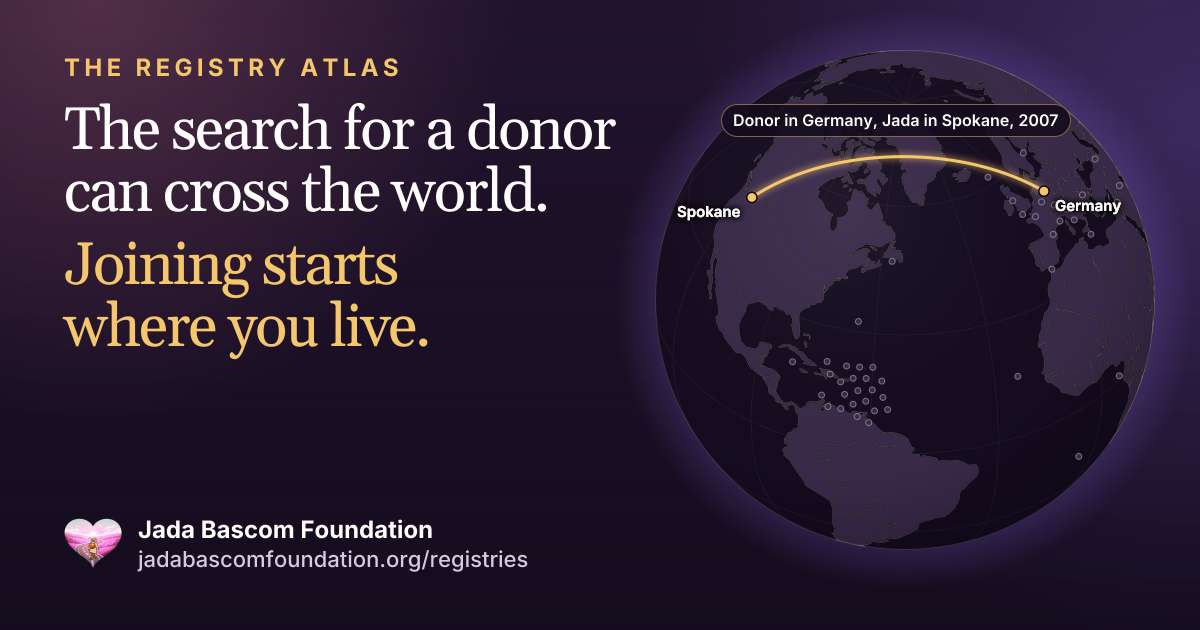
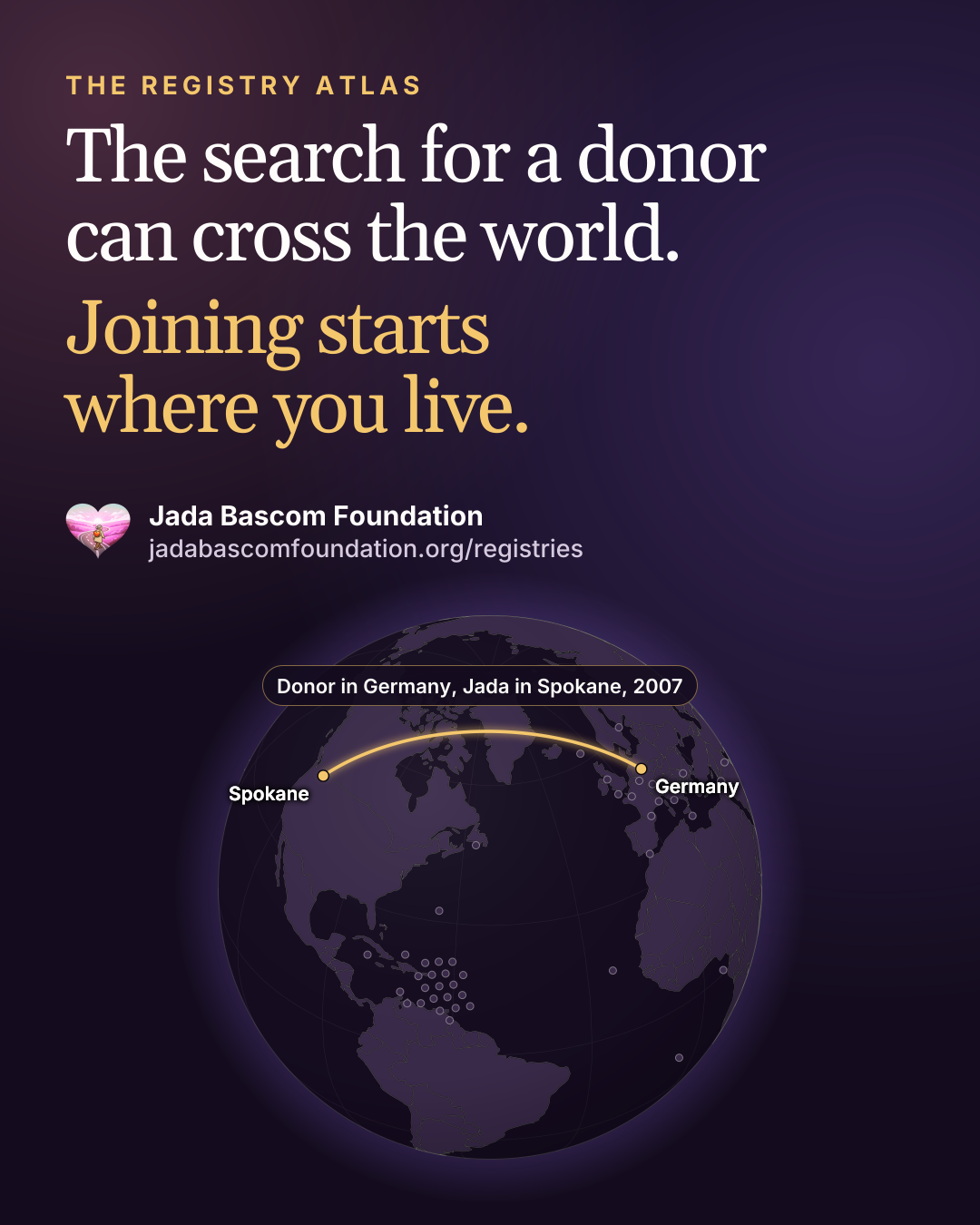
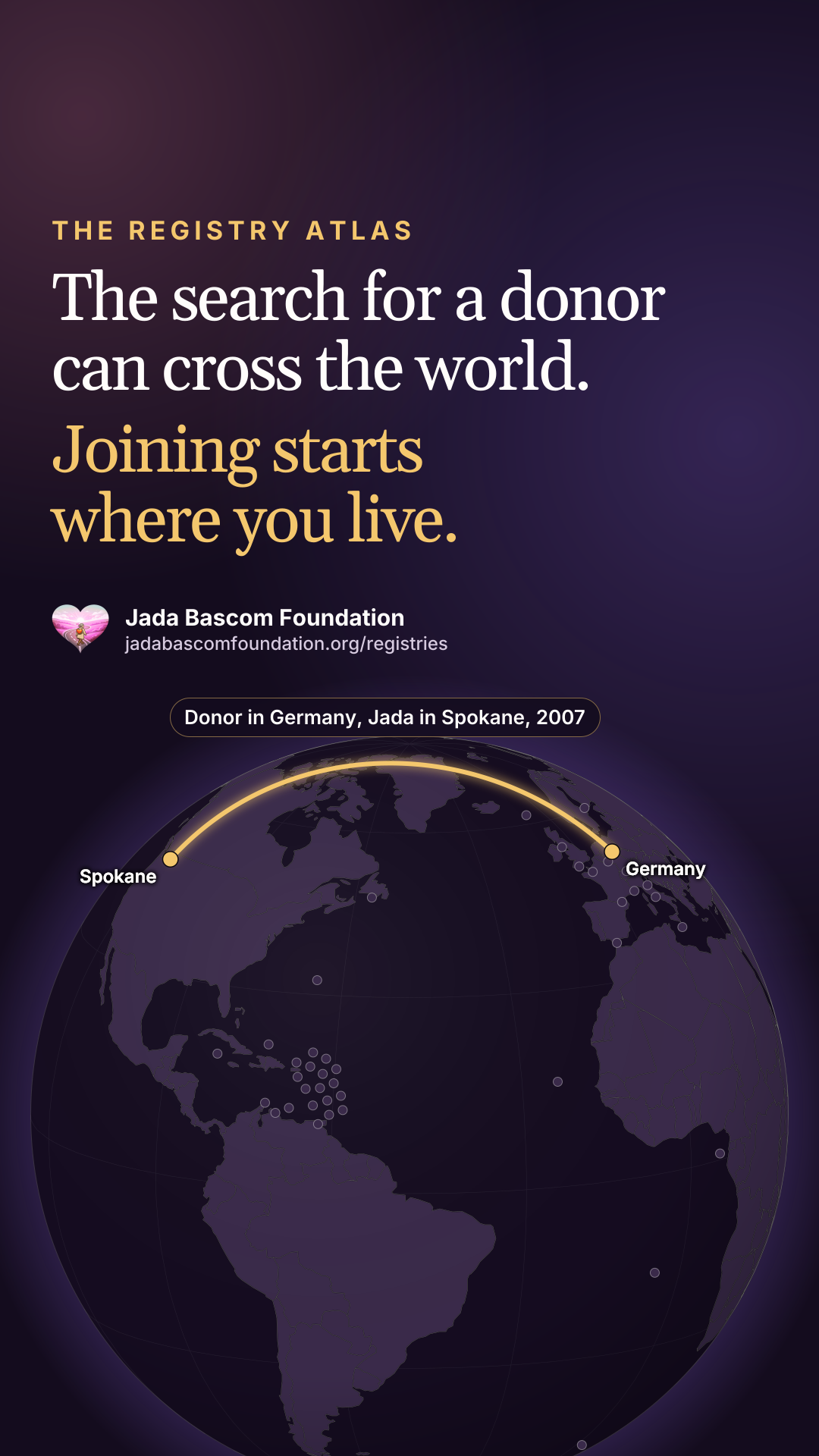
The search for a donor can cross the world. Joining starts where you live.
Where you live decides which bone marrow (blood stem cell) donor registry you can join. As of , we’ve verified a way to join for people living in 79 of 250 countries and territories, and the Registry Atlas says what we found in each.
Type a country, territory or its local name. 250 places.
In the U.S.? NMDP, Gift of Life and DKMS US

- You can join here59 places
- Join through another service16 places
- Limited, paused or starting4 places
- No verified way yet124 places
- Still checking40 places
7 places have no year-round residents. Jump to the list
How one donor search crosses the world
One baby
Jada Bascom was one month old when she was diagnosed with acute myeloid leukemia. Five rounds of chemotherapy followed, and hundreds of blood transfusions. No one in her family was a match.
Spring 2007
Jada, one month old
The search for a stranger began.
One stranger
Five thousand miles away in Germany, Torsten Huber had joined a donor registry at a donor drive in April 2006. In 2007 the search for Jada’s donor found him. She had her transplant at seven months old. Today she is a healthy young woman.
“Of course I registered to help somebody. I’m really glad that I could help Jada.”
Donor in Germany, Jada in Spokane, 2007
One shared list
Torsten could be found because registries share their lists. Organizations in 56 countries and territories list their volunteers in one international search, run by the World Marrow Donor Association. On October 14, 2026, it held more than 43 million adult donor records.
Separately, it listed about 725,000 units of donated umbilical cord blood.
The 56 places
- Argentina
- Armenia
- Australia
- Austria
- Belgium
- Brazil
- Bulgaria
- Canada
- Chile
- China
- Croatia
- Cyprus
- Czechia
- Denmark
- Finland
- France
- Germany
- Greece
- Hong Kong
- Hungary
- India
- Iran
- Ireland
- Israel
- Italy
- Japan
- Kazakhstan
- Lithuania
- Luxembourg
- Mexico
- Netherlands
- New Zealand
- North Macedonia
- Norway
- Paraguay
- Poland
- Portugal
- Romania
- Russia
- Saudi Arabia
- Serbia
- Singapore
- Slovakia
- Slovenia
- South Africa
- South Korea
- Spain
- Sweden
- Switzerland
- Taiwan
- Thailand
- Türkiye
- Ukraine
- United Kingdom
- United States
- Uruguay
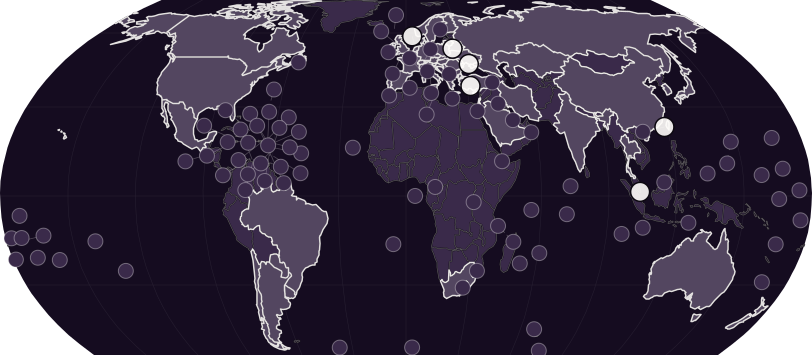
43,447,961adult donor records
56countries and territories whose organizations list them
724,882cord blood units, counted separately
Source: World Marrow Donor Association, Search & Match statistics, read October 14, 2026. These are records listed for searching, not a count of people available to donate.
Where you live
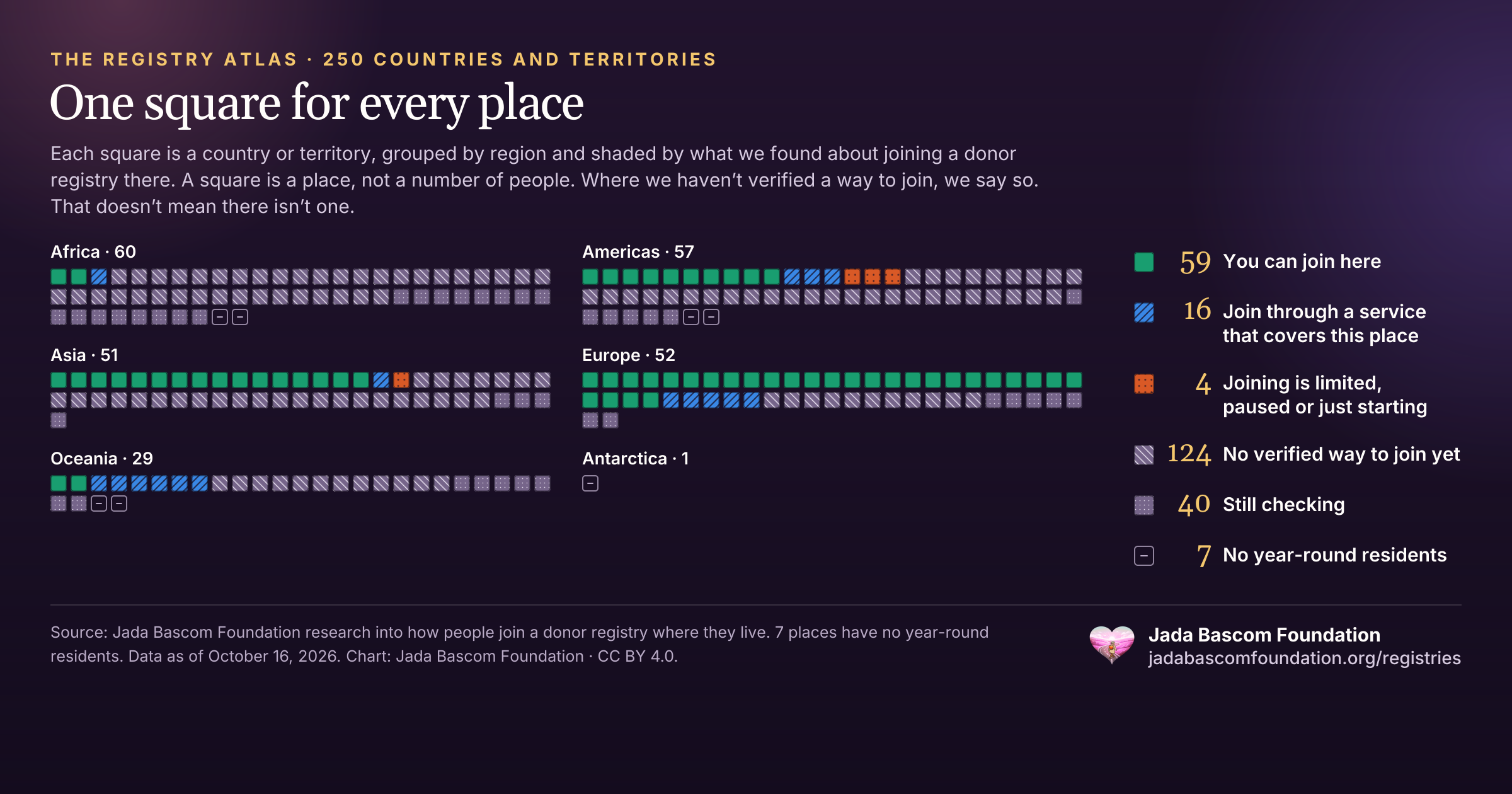
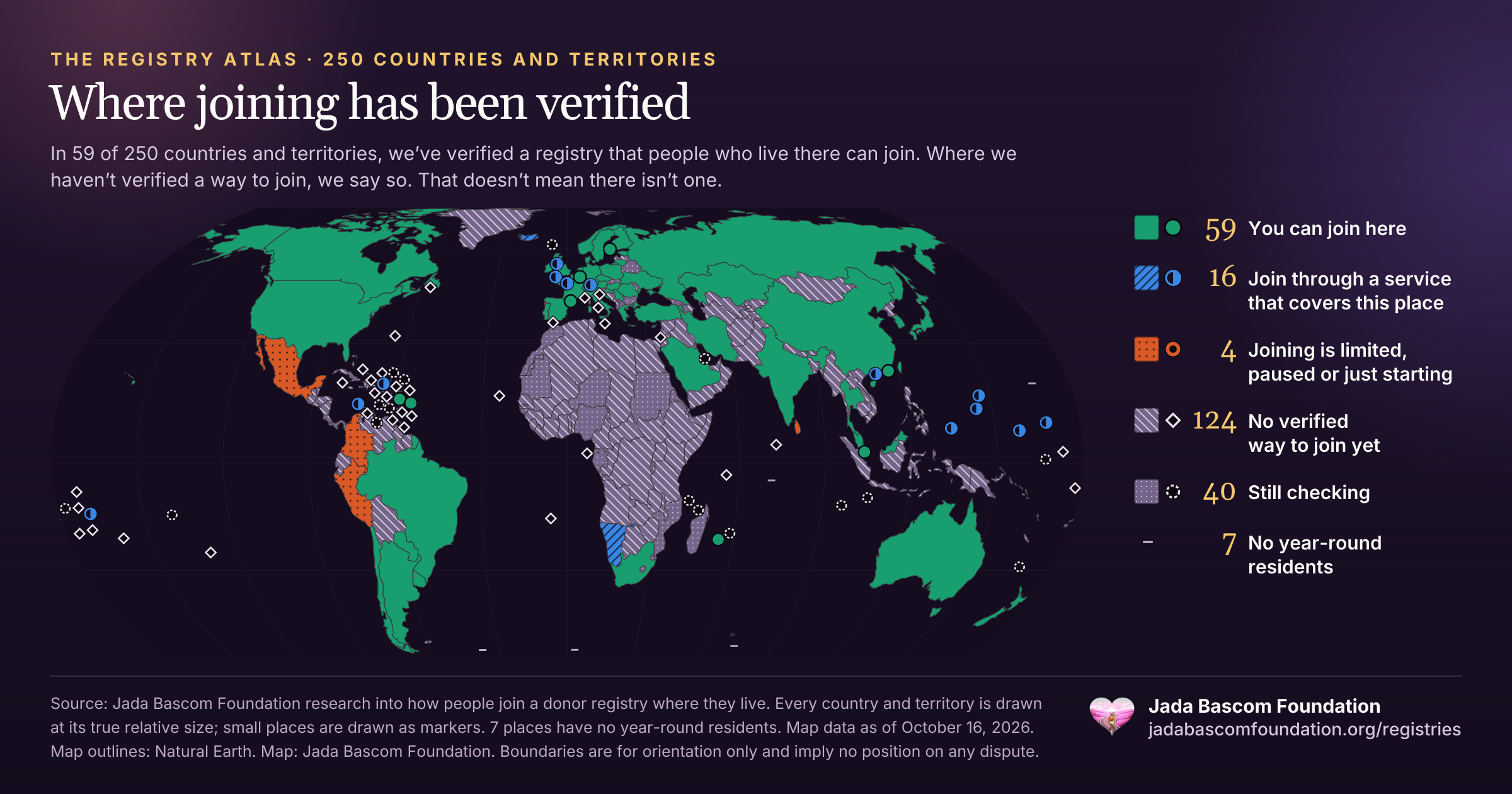
You can’t join from just anywhere. Registries usually enroll people who live in the places they serve, and the world is uneven. In 59 of 250 countries and territories, we’ve verified a registry that people who live there can join. In 16, people join through a service that covers them, and in 4, joining is limited, paused or just starting.
Where we haven’t verified a way to join, we say so. That doesn’t mean there isn’t one, and we keep checking.
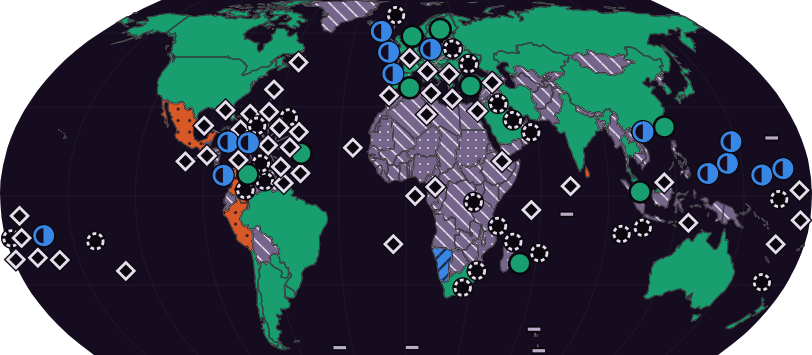
- You can join here59 places
- Join through a service that covers this place16 places
- Joining is limited, paused or just starting4 places
- No verified way to join yet124 places
- Still checking40 places
- No one lives here year-round7 places
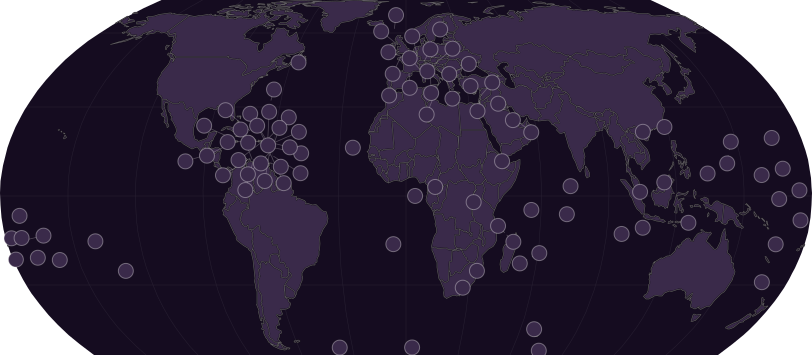
Globe and map show where joining has been verified, not where donors are needed. Checked October 11, 2026.
One square for every place
We’ve verified a way to join for people living in 79 of 250 countries and territories.
Of the 79, 59 have a registry at home, 16 join through a service based elsewhere, and in 4 joining is limited, paused or just starting. Each square is a country or territory, grouped by region and never ranked: one place, one square, whatever its population. A dash is a place where no one lives year-round.
The numbers behind this chart are in a table under “Show as table”.
Africa 60 places · 3 with a verified way to join
Americas 57 places · 16 with a verified way to join
Asia 51 places · 18 with a verified way to join
Europe 52 places · 34 with a verified way to join
Oceania 29 places · 8 with a verified way to join
Antarctica 1 place
- You can join here59
- Join through a service that covers this place16
- Joining is limited, paused or just starting4
- No verified way to join yet124
- Still checking40
- No one lives here year-round7
Source: Jada Bascom Foundation, registry research. Each place is dated in the list. Checked .
Show as table
| Region | You can join here | Join through a service that covers this place | Joining is limited, paused or just starting | No verified way to join yet | Still checking | No one lives here year-round | All places |
|---|---|---|---|---|---|---|---|
| Africa | 2 | 1 | 0 | 39 | 16 | 2 | 60 |
| Americas | 10 | 3 | 3 | 33 | 6 | 2 | 57 |
| Asia | 16 | 1 | 1 | 29 | 4 | 0 | 51 |
| Europe | 29 | 5 | 0 | 11 | 7 | 0 | 52 |
| Oceania | 2 | 6 | 0 | 12 | 7 | 2 | 29 |
| Antarctica | 0 | 0 | 0 | 0 | 0 | 1 | 1 |
| All regions | 59 | 16 | 4 | 124 | 40 | 7 | 250 |
How to cite
Jada Bascom Foundation, “We’ve verified a way to join for people living in 79 of 250 countries and territories,” The Registry Atlas, checked October 11, 2026, https://jadabascomfoundation.org/how-do-i-find-my-bone-marrow-registry#every-place. Data: Jada Bascom Foundation, registry research.
Please credit Jada Bascom Foundation for the figures too.
02Find your place
Every country and territory
Each place says what we found about joining there and when we checked. Open one for how joining works, or what you can do today.
- No one lives here year-roundNo year-round residents7 places
250 places, A to Z
A
- AfghanistanNo verified way yetChecked
- Åland IslandsYou can join here · Finnish Stem Cell RegistryChecked
- AlbaniaNo verified way yetChecked
- AlgeriaNo verified way yetChecked
- American SamoaJoin through another service · NMDPChecked
- AndorraYou can join here · SAASChecked
- AngolaNo verified way yetChecked
- AnguillaNo verified way yetChecked
- AntarcticaNo one lives here year-round, so there’s no registry to join.
- Antigua and BarbudaNo verified way yetChecked
- ArgentinaYou can join here · INCUCAIChecked
- ArmeniaYou can join here · Armenian Bone Marrow Donor RegistryChecked
- ArubaJoin through another service · MatchisChecked
- AustraliaYou can join here · Stem Cell Donors AustraliaChecked
- AustriaYou can join here · Geben für LebenChecked
- AzerbaijanNo verified way yetChecked
B
- BahamasNo verified way yetChecked
- BahrainStill checkingChecked
- BangladeshNo verified way yetChecked
- BarbadosNo verified way yetChecked
- BelarusStill checkingChecked
- BelgiumYou can join here · Marrow Donor Program BelgiumChecked
- BelizeNo verified way yetChecked
- BeninNo verified way yetChecked
- BermudaNo verified way yetChecked
- BhutanNo verified way yetChecked
- BoliviaNo verified way yetChecked
- Bonaire, Sint Eustatius and SabaStill checkingChecked
- Bosnia and HerzegovinaNo verified way yetChecked
- BotswanaNo verified way yetChecked
- Bouvet IslandNo one lives here year-round, so there’s no registry to join.Checked
- BrazilYou can join here · REDOMEChecked
- British Indian Ocean TerritoryNo one lives here year-round, so there’s no registry to join.Checked
- British Virgin IslandsNo verified way yetChecked
- BruneiNo verified way yetChecked
- BulgariaStill checking · Bulgarian Bone Marrow Donor RegistryChecked
- Burkina FasoNo verified way yetChecked
- BurundiNo verified way yetChecked
C
- Cabo VerdeNo verified way yetChecked
- CambodiaNo verified way yetChecked
- CameroonNo verified way yetChecked
- CanadaYou can join here · Canadian Blood ServicesChecked
- Cayman IslandsNo verified way yetChecked
- Central African RepublicNo verified way yetChecked
- ChadNo verified way yetChecked
- ChileYou can join here · DKMS ChileChecked
- ChinaYou can join here · China Marrow Donor ProgramChecked
- Christmas IslandStill checking · Stem Cell Donors AustraliaChecked
- Cocos (Keeling) IslandsStill checking · Stem Cell Donors AustraliaChecked
- ColombiaLimited, paused or starting · DarCélulasChecked
- ComorosStill checkingChecked
- Cook IslandsNo verified way yetChecked
- Costa RicaNo verified way yetChecked
- Côte d'IvoireNo verified way yetChecked
- CroatiaYou can join here · Croatian Bone Marrow Donor RegistryChecked
- CubaNo verified way yetChecked
- CuraçaoNo verified way yetChecked
- CyprusYou can join here · Karaiskakio FoundationChecked
- CzechiaYou can join here · Czech Stem Cells RegistryChecked
D
E
- EcuadorNo verified way yetChecked
- EgyptNo verified way yetChecked
- El SalvadorNo verified way yetChecked
- Equatorial GuineaNo verified way yetChecked
- EritreaStill checkingChecked
- EstoniaYou can join here · Tartu University Hospital Stem Cell CenterChecked
- EswatiniStill checkingChecked
- EthiopiaNo verified way yetChecked
F
- Falkland Islands (Malvinas)No verified way yetChecked
- Faroe IslandsStill checkingChecked
- Federated States of MicronesiaJoin through another service · NMDPChecked
- FijiNo verified way yetChecked
- FinlandYou can join here · Finnish Stem Cell RegistryChecked
- FranceYou can join here · France Greffe de MoelleChecked
- French GuianaYou can join here · France Greffe de MoelleChecked
- French PolynesiaStill checkingChecked
- French Southern TerritoriesNo one lives here year-round, so there’s no registry to join.Checked
G
- GabonStill checkingChecked
- GambiaNo verified way yetChecked
- GeorgiaStill checkingChecked
- GermanyYou can join here · DKMSChecked
- GhanaNo verified way yetChecked
- GibraltarNo verified way yetChecked
- GreeceYou can join here · Orama ElpidasChecked
- GreenlandNo verified way yetChecked
- GrenadaStill checkingChecked
- GuadeloupeYou can join here · France Greffe de MoelleChecked
- GuamJoin through another service · NMDPChecked
- GuatemalaNo verified way yetChecked
- GuernseyJoin through another service · DKMS UKChecked
- GuineaNo verified way yetChecked
- Guinea-BissauNo verified way yetChecked
- GuyanaNo verified way yetChecked
H
- HaitiNo verified way yetChecked
- Heard Island and McDonald IslandsNo one lives here year-round, so there’s no registry to join.
- HondurasNo verified way yetChecked
- Hong KongYou can join here · Hong Kong Bone Marrow Donor RegistryChecked
- HungaryYou can join here · Hungarian Stem Cell Donor RegistryChecked
I
- IcelandJoin through another service · BlóðbankinnChecked
- IndiaYou can join here · DKMS Foundation IndiaChecked
- IndonesiaNo verified way yetChecked
- IranYou can join here · Iranian Blood Transfusion OrganizationChecked
- IraqNo verified way yetChecked
- IrelandYou can join here · Irish Unrelated Bone Marrow RegistryChecked
- Isle of ManJoin through another service · DKMS UKChecked
- IsraelYou can join here · Ezer MizionChecked
- ItalyYou can join here · IBMDRChecked
J
K
L
- LaosNo verified way yetChecked
- LatviaNo verified way yetChecked
- LebanonNo verified way yetChecked
- LesothoStill checkingChecked
- LiberiaNo verified way yetChecked
- LibyaNo verified way yetChecked
- LiechtensteinJoin through another service · Blood Stem Cells SwitzerlandChecked
- LithuaniaYou can join here · Lithuanian National Bone Marrow Donor RegistryChecked
- LuxembourgYou can join here · Stefan-Morsch-StiftungChecked
M
- MacaoJoin through another service · Macao Blood Transfusion CentreChecked
- MadagascarStill checkingChecked
- MalawiNo verified way yetChecked
- MalaysiaYou can join here · Malaysian Stem Cell RegistryChecked
- MaldivesNo verified way yetChecked
- MaliNo verified way yetChecked
- MaltaNo verified way yetChecked
- Marshall IslandsJoin through another service · NMDPChecked
- MartiniqueYou can join here · France Greffe de MoelleChecked
- MauritaniaStill checkingChecked
- MauritiusStill checkingChecked
- MayotteStill checkingChecked
- MexicoLimited, paused or starting · NMDP MéxicoChecked
- MoldovaNo verified way yetChecked
- MonacoNo verified way yetChecked
- MongoliaNo verified way yetChecked
- MontenegroNo verified way yetChecked
- MontserratNo verified way yetChecked
- MoroccoStill checkingChecked
- MozambiqueStill checkingChecked
- MyanmarNo verified way yetChecked
N
- NamibiaJoin through another service · South African Bone Marrow Registry (SABMR)Checked
- NauruWe haven’t verified a way to join here yet. That doesn’t mean there isn’t one. We’re checking.Checked
- NepalNo verified way yetChecked
- NetherlandsYou can join here · MatchisChecked
- New CaledoniaStill checkingChecked
- New ZealandYou can join here · New Zealand Bone Marrow Donor RegistryChecked
- NicaraguaNo verified way yetChecked
- NigerStill checkingChecked
- NigeriaStill checkingChecked
- NiueNo verified way yetChecked
- Norfolk IslandStill checking · Stem Cell Donors AustraliaChecked
- North KoreaNo verified way yetChecked
- North MacedoniaStill checkingChecked
- Northern Mariana IslandsJoin through another service · NMDPChecked
- NorwayYou can join here · Norwegian Bone Marrow Donor RegistryChecked
P
- PakistanNo verified way yetChecked
- PalauJoin through another service · NMDPChecked
- PalestineNo verified way yetChecked
- PanamaStill checkingChecked
- Papua New GuineaNo verified way yetChecked
- ParaguayYou can join here · INATChecked
- PeruLimited, paused or starting · ReD-CPHChecked
- PhilippinesNo verified way yetChecked
- Pitcairn IslandsNo verified way yetChecked
- PolandYou can join here · DKMS PolandChecked
- PortugalYou can join here · CEDACEChecked
- Puerto RicoJoin through another service · NMDPChecked
R
S
- Saint BarthélemyStill checkingChecked
- Saint Helena, Ascension and Tristan da CunhaNo verified way yetChecked
- Saint Kitts and NevisNo verified way yetChecked
- Saint LuciaNo verified way yetChecked
- Saint MartinStill checkingChecked
- Saint Pierre and MiquelonNo verified way yetChecked
- Saint Vincent and the GrenadinesNo verified way yetChecked
- SamoaNo verified way yetChecked
- San MarinoNo verified way yetChecked
- São Tomé and PríncipeNo verified way yetChecked
- Saudi ArabiaYou can join here · KFSH&RC Stem Cell Donor RegistryChecked
- SenegalNo verified way yetChecked
- SerbiaYou can join here · Serbian Bone Marrow Donor RegistryChecked
- SeychellesNo verified way yetChecked
- Sierra LeoneNo verified way yetChecked
- SingaporeYou can join here · Bone Marrow Donor ProgrammeChecked
- Sint MaartenNo verified way yetChecked
- SlovakiaStill checking
- SloveniaStill checkingChecked
- Solomon IslandsNo verified way yetChecked
- SomaliaNo verified way yetChecked
- South AfricaYou can join here · South African Bone Marrow Registry (SABMR)Checked
- South Georgia and the South Sandwich IslandsNo one lives here year-round, so there’s no registry to join.Checked
- South KoreaYou can join here · Korean Red Cross Blood ServicesChecked
- South SudanNo verified way yetChecked
- SpainYou can join here · REDMOChecked
- Sri LankaLimited, paused or starting · Sri Lanka Stem Cell Donor RegistryChecked
- SudanStill checkingChecked
- SurinameNo verified way yetChecked
- Svalbard and Jan MayenStill checkingChecked
- SwedenYou can join here · TobiasregistretChecked
- SwitzerlandYou can join here · Blood Stem Cells SwitzerlandChecked
- SyriaNo verified way yetChecked
T
- TaiwanYou can join here · Buddhist Tzu Chi Stem Cells CenterChecked
- TajikistanNo verified way yetChecked
- TanzaniaNo verified way yetChecked
- ThailandYou can join here · Thai National Stem Cell Donor RegistryChecked
- Timor-LesteNo verified way yetChecked
- TogoNo verified way yetChecked
- TokelauNo verified way yetChecked
- TongaNo verified way yetChecked
- Trinidad and TobagoNo verified way yetChecked
- TunisiaNo verified way yetChecked
- TürkiyeYou can join here · Türk KızılayChecked
- TurkmenistanNo verified way yetChecked
- Turks and Caicos IslandsNo verified way yetChecked
- TuvaluNo verified way yetChecked
U
- UgandaNo verified way yetChecked
- UkraineYou can join here · Ukrainian Bone Marrow Donor RegistryChecked
- United Arab EmiratesNo verified way yetChecked
- United KingdomYou can join here · DKMS UKChecked
- United StatesYou can join here · NMDPChecked
- United States Minor Outlying IslandsNo one lives here year-round, so there’s no registry to join.
- United States Virgin IslandsJoin through another service · NMDPChecked
- UruguayYou can join here · SINDOMEChecked
- UzbekistanNo verified way yetChecked
V
No place matches these filters. Turn a filter off to see more places.
03 What joining involves
Five steps, from joining to donating
Check you can join
Each registry sets its own age range and health rules. Your country’s page links to them.
Give a sample
At many registries it’s a cheek swab you can do at home, while others take a sample at a donor drive or when you give blood.
You’re on the list
The registry records your tissue type so searches can find you.
If you match a patient
The registry contacts you, checks you’re still willing and well, and arranges more tests.
Donation
Most donors give stem cells collected from the blood: four or five days of daily injections first, then several hours connected to a machine that collects the cells. Some give marrow from the back of the hip under general anesthesia. Both have side effects, and the registry explains which is needed and supports you through it.
Joining doesn’t mean you’ll be asked to donate. It means you can be found.
How we check
For each place we read the registry’s own pages, national charity and company records, government health sources and the World Marrow Donor Association’s directory, in local languages where we can. We record the date we checked. When sources disagree, we say so. When we can’t verify a way to join, we say that too, and keep looking.
Registry data and methodsIf you know something we’ve missed, tell us.
Checked before it was published
Sources
- World Marrow Donor Association, Search & Match statistics
Adult donor records and cord blood units listed for searching, and the countries and territories whose organizations list them.
Checked
- DKMS, Frequently asked questions
How DKMS uses a cheek swab to join, typing and listing, being contacted if you match, and the two ways to donate, with five days of injections before a blood stem cell donation.
Checked
- Stem Cell Donors Australia, The donation process
What happens after you join and if you match a patient.
Checked
- Stem Cell Donors Australia, Donation methods
Blood stem cell and marrow donation, the days of injections first, and how long a collection takes.
Checked
- NMDP, Join the donor registry
NMDP’s own page on who can join in the U.S., and how, for the questions below.
Checked
- World Marrow Donor Association, About WMDA
How registries share one international search across borders.
Checked
- World Marrow Donor Association, Find your registry
The world list of registries that each place’s page points to.
Checked
- Jada Bascom Foundation, About Jada and Torsten
Jada’s diagnosis and transplant, and Torsten’s own account of joining.
Checked
Questions about finding your registry
Which registry can I join?
Usually the one that serves the country or territory where you live, because many registries sign up only people who live there. Where more than one registry serves a place, its page lists each one and who it’s for.
Can I join a registry in another country?
Usually not: many registries sign up only people who live in their own country, though a few also take their citizens who live abroad.
What if there’s no registry where I live?
Your place’s page says what we searched and when, and what you can do today. That doesn’t mean there isn’t one.
Is joining the registry the same as giving blood?
No. Giving blood doesn’t put you on a stem cell donor registry by itself, though in some countries you can join on the same visit.
How do I join the bone marrow registry?
Use the official entry point for where you live and follow that registry’s instructions. The registry confirms eligibility, explains whether enrollment uses a mailed cheek swab or an in-person process, arranges HLA typing, and maintains your profile. Processes and costs vary; many registries use cheek swabs, while some enroll in person.
Is there a cost to join the registry?
Enrollment and cost policies vary by registry and country. For eligible U.S. residents, NMDP currently provides and processes a free mailed cheek-swab kit. Check the official registry for where you live for its current process and any fees.
Do I need to choose a registry, or will you pick for me?
Registries usually enroll people who live in the places they serve, so where you live decides. Where more than one registry serves a place, its page lists each option and who it is for. If your connection appears to be in a place where we’ve verified a registry, a button under the search names it and says who it is for. Your connection isn’t always where you live, so check that before you go ahead.
Is the Jada Bascom Foundation a registry?
No. JBF is not a registry. We keep this guide to help people reach official registries; using a JBF link does not change the registry’s eligibility or cost rules. The registry owns enrollment, donor records, HLA typing and donation coordination.
How long does the registration process take?
Timing varies by registry and enrollment method. Some start with an online form and a mailed swab; others use an in-person process. Your registry will explain when your enrollment and tissue typing are complete.
What happens after I join?
The registry lists your tissue type so transplant teams can search it. It contacts you only if you may match a patient; then there are more health checks, and you give consent again before any donation. Keep your contact and health details current with that registry so it can reach you.
Do I have to donate if I’m matched?
No. You can decline at any point. The registry asks for renewed consent before any actual donation, and you can also withdraw from the registry entirely at any time. Registration creates an opportunity to help; it does not create an obligation.
What if I move to another country after registering?
If your registry lists its donors in the World Marrow Donor Association’s international search, you can be matched with patients in other countries. If you move, contact your registry to update your details, and ask whether you should stay on its list or join the registry where you now live.
Is there an age limit to join the registry?
Yes, but the range varies. NMDP currently recruits eligible U.S. residents ages 18–35. Other registries set their own minimum and maximum ages, so check the current rule with the official registry for where you live.
Learn more before you join
Answers to the questions people ask most before they sign up.
Be someone’s Torsten
Your record could reach a patient on the other side of the world.
That’s how Torsten’s reached Jada. Find the registry that serves the place you live.