The bone marrow donation process
How bone marrow donation works
Blood-forming stem cells are collected in two ways: peripheral blood stem cell (PBSC) donation and surgical marrow harvest. The official registry and medical team coordinate the method, timing, and donor care.
Enrollment and donor-cost policies vary by registry • Both methods explained
Last updated

The two donation methods, side by side
Most people picture a large needle in the hip. For the large majority of donors today, that is not what happens. The default method is PBSC, where stem cells are collected from your bloodstream while you stay awake. The surgical harvest still exists, but it is the exception. NMDP reports that about 90% of donations use PBSC and about 10% use surgical marrow harvest. Both PBSC and marrow harvest are established collection methods, but recipient risks and outcomes differ by age, diagnosis, and clinical context. The transplant team selects the method for the patient. See the NMDP marrow-donation guidance. Here is how the two compare before we walk through each one in detail.
| PBSC (Peripheral Blood Stem Cell) | Marrow Harvest (Surgical) | |
|---|---|---|
| Share of donations (NMDP) | About 90% | About 10% |
| Method | Usually arm IVs; stem cells separated by machine | Needles into the pelvic bone under anesthesia |
| Procedure time | 4–8 hours, in one day | 1–2 hours, in one day |
| Return to activities | Usually 1–7 days | Usually 2–7 days |
| Median full recovery (NMDP) | 7 days | 20 days |
| Anesthesia | None for collection; local for a central line | General |
| Collection sites | Usually arm IVs; central line if needed | Small incisions; usually no stitches |
| Comparable feeling | A long blood donation plus Filgrastim aches | Hard-workout soreness |
PBSC (Peripheral Blood Stem Cell)
- Share of donations (NMDP)
- About 90%
- Method
- Usually arm IVs; stem cells separated by machine
- Procedure time
- 4–8 hours, in one day
- Return to activities
- Usually 1–7 days
- Median full recovery (NMDP)
- 7 days
- Anesthesia
- None for collection; local for a central line
- Collection sites
- Usually arm IVs; central line if needed
- Comparable feeling
- A long blood donation plus Filgrastim aches
Marrow Harvest (Surgical)
- Share of donations (NMDP)
- About 10%
- Method
- Needles into the pelvic bone under anesthesia
- Procedure time
- 1–2 hours, in one day
- Return to activities
- Usually 2–7 days
- Median full recovery (NMDP)
- 20 days
- Anesthesia
- General
- Collection sites
- Small incisions; usually no stitches
- Comparable feeling
- Hard-workout soreness
Enrollment and donor-cost policies vary by registry • Both methods explained
In detail
PBSC donation: the day-by-day timeline
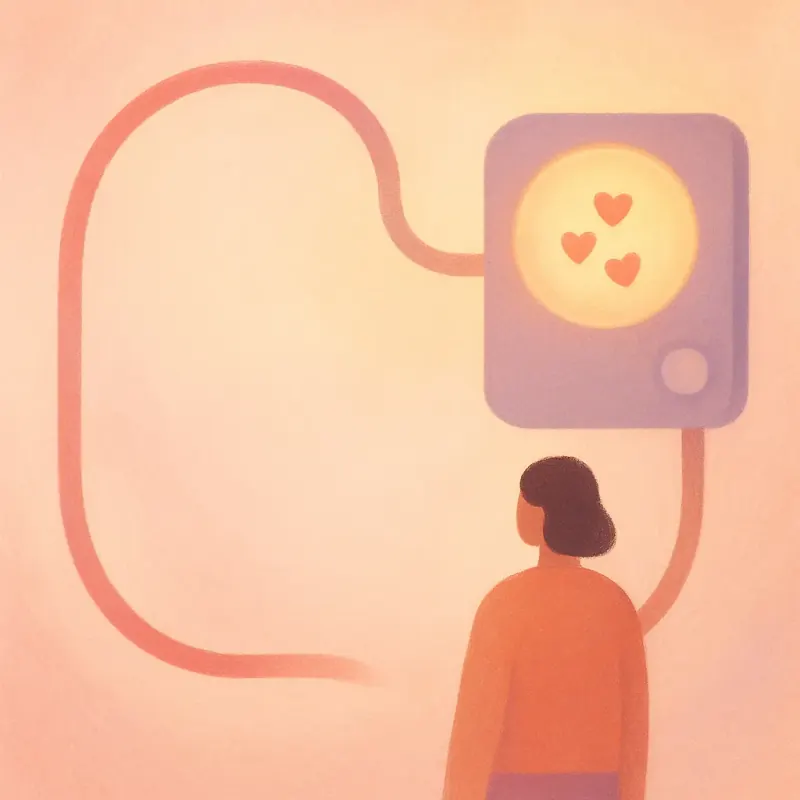
PBSC is the method most donors give through. It runs on a short, predictable schedule: a few days of Filgrastim injections to move stem cells from your marrow into your bloodstream, then one day of collection at an outpatient center, then a short recovery. Collection is done through IV lines while you stay awake. If your arm veins are unsuitable, a central venous line may be needed, placed with local anesthesia and your consent. Here is what each stage looks like, day by day.
Days 1–5 (before donation)
- The donor center coordinates daily filgrastim doses; where and how they are administered varies by registry and donor-center plan. See the NMDP PBSC donation timeline.
- Common side effects are mild bone aching (often described as “like the flu”), headache, and fatigue.
- Those effects usually start 24 to 48 hours into the injection cycle.
- Most donors carry on with normal life — work, light exercise, and family time.
Day 5 (or Day 6) — donation day
- You arrive at the collection center, typically a specialized blood bank or hospital outpatient unit.
- An IV is usually placed in one arm, and blood is drawn through it.
- The blood passes through an apheresis machine that separates out the stem cells — the cells the patient needs — from the rest of the blood.
- The remaining blood, including red cells and plasma, is returned to you through a second IV in your other arm when arm veins are suitable.
- If your arm veins are unsuitable, a central venous line may be needed, placed with local anesthesia and your consent. The NMDP donor guide explains this option.
- Total collection time is 4 to 8 hours, sometimes split across two days.
- You stay awake. Most donors read, watch a screen, work on a laptop, or sleep.
- Some donors feel tingling in the lips or fingers from the anticoagulant used in the machine; staff manage it with calcium supplementation.
Day 6–7 (after donation)
- NMDP reports that most PBSC donors return to work, school, and regular activities within one to seven days.
- NMDP reports a median time to full PBSC recovery of seven days.
- Some report mild fatigue that lingers for 3 to 5 days.
- Your blood stem cells return to their normal level within a few weeks.
Procedure standards for the US donor program are published by the HRSA C.W. Bill Young Cell Transplantation Program. Recovery ranges come from the NMDP after-donation guidance. A prospective study of 11,942 related and unrelated donors in Haematologica (Pulsipher et al., 2019) found that marrow donors had similar experiences whether related or unrelated. Related PBSC donors, especially those with other health conditions, had more pain and side effects during collection and were more likely not to have fully recovered at one year.
Bone marrow harvest: when it’s chosen and what happens
The surgical harvest is the older method, and for most of the public it is still the mental image of “donating bone marrow.” In reality it is now the minority path, used in about one in ten donations, according to NMDP. Here is when it is chosen and exactly what the day involves.
When harvest is chosen (not PBSC)
- The transplant team selects harvest based on patient need — most often when the recipient is very young, very small, or has a condition where marrow stem cells are preferred over peripheral blood stem cells.
- NMDP reports that it accounts for about 10% of donations.
- The choice is made by the medical team, not by the donor.
The procedure day
- You arrive at the hospital in the morning.
- Nearly all donors receive general anesthesia and are unconscious for the procedure; some receive regional anesthesia, such as a spinal or epidural.
- The medical team uses needles through several small incisions to collect marrow from the back of the pelvic bone, called the iliac crest.
- Liquid marrow is drawn out through the needles using syringes.
- The procedure itself takes about 1 to 2 hours.
- You wake up in recovery and typically go home the same day.
Recovery
- Expect soreness in the lower back and hip area, similar to a hard workout.
- Most donors return to work, school, and regular activities within 2 to 7 days.
- NMDP reports a median time to full recovery of about 20 days.
- Follow your donor team's guidance before resuming physical work or exercise.
- Your marrow regenerates fully within about 4 to 6 weeks.
- Soreness is managed with over-the-counter ibuprofen; some donors need a brief prescription.
The procedure and recovery described here match the patient-facing guidance published by the Cleveland Clinic, the Mayo Clinic, and Fred Hutchinson Cancer Center, the institution where modern bone marrow transplantation was pioneered.
The complete donor journey
The two procedures above sit inside a longer path that starts the day you register and ends with follow-up after you donate. Most people are on the registry for years before they are ever called, and many are never called at all. Here is the full sequence, end to end.
- Join the registry where you live. Register through your official registry. Enrollment method, timing, and cost rules vary. Find yours in the Registry Atlas.
- Wait. Most donors are on the registry for years before being called. Some are never called.
- Get the call. If you are a potential match for a patient, the registry contacts you. You confirm or decline.
- Confirmation testing. A blood sample for more detailed HLA testing to confirm the match.
- Final confirmation and health screening. A full medical workup. The transplant team makes the final go or no-go decision.
- Method selected. PBSC or harvest, chosen by the team based on what the patient needs.
- Donation. As described in the PBSC and harvest sections above.
- Recovery and follow-up. The registry follows up on your wellbeing for weeks to months after you donate.
Enrollment and donor-cost policies vary by registry • Both methods explained
What happens after you donate
Once your cells are collected, they are transported — often by a dedicated courier on the same day — to the hospital where the recipient is waiting. Timing matters, so the handoff is carefully coordinated around the patient’s treatment schedule.
By the time your cells arrive, the recipient has already been prepared with conditioning chemotherapy or radiation that clears out their existing marrow. Your cells are then infused into their bloodstream, much like a transfusion. Over the following days and weeks, the donated stem cells migrate to the recipient’s bone marrow and begin producing new, healthy blood cells — a process called engraftment. Until those new cells take hold, the recipient has very little immune defense and is cared for under close monitoring. The National Cancer Institute explains how the transplanted cells rebuild the blood and immune system after this kind of transplant.
The recipient’s own recovery takes months, but the goal is lasting: many people go on to long-term remission or cure. You can read one such outcome in Torsten and Jada’s story, where a stranger’s donation reached a child who needed it.
Questions
Frequently asked questions
How does bone marrow donation work?
Two methods exist. NMDP reports that about 90% of donations use PBSC: it is non-surgical and collects stem cells from your bloodstream, while about 10% use surgical marrow harvest, where marrow is drawn from the pelvic bone under anesthesia. Both PBSC and marrow harvest are established collection methods, but recipient risks and outcomes differ by age, diagnosis, and clinical context. The transplant team selects the method for the patient.
What is PBSC donation?
PBSC stands for Peripheral Blood Stem Cell donation. Stem cells are collected from your bloodstream through an IV-and-machine process called apheresis. Collection does not require surgery or general anesthesia. If your arm veins are unsuitable, a central venous line may be needed, placed with local anesthesia and your consent. The donor center coordinates daily filgrastim doses before collection; where and how they are administered varies by registry and donor-center plan.
What is bone marrow harvest?
Bone marrow harvest is a surgical procedure. Nearly all donors receive general anesthesia and are unconscious; some receive regional anesthesia, such as a spinal or epidural, instead. The medical team draws liquid marrow from the back of the pelvic bone using needles through small incisions. Donors usually go home the same day. It is the less common method, chosen by the transplant team when marrow cells are preferred for a specific patient.
How long does the donation take?
PBSC collection takes about 4 to 8 hours on donation day, sometimes split across two days. Surgical harvest takes about 1 to 2 hours under anesthesia, plus time in recovery before you go home.
How long is recovery?
NMDP reports that most PBSC donors return to work, school, and regular activities within one to seven days. NMDP reports a median time to full PBSC recovery of seven days. Marrow-harvest donors typically return to activities within two to seven days, with a median full recovery of about 20 days. Your donor team gives you guidance for your method and health.
Does bone marrow grow back?
Yes. The blood-forming stem cells you donate are the kind your body continuously makes, and your body replaces them. Blood stem cells return to their normal level within a few weeks after PBSC donation; marrow is replaced within about 4 to 6 weeks after a marrow harvest. A donation does not reduce your own long-term blood or immune function.
Do I get to choose between PBSC and surgical?
No. The transplant team chooses the method based on what gives the patient the best chance, considering the patient’s age, size, and diagnosis. You are told which method is needed during your donor workup, and you can decline at any point before you give final consent.
Where does the donation happen?
PBSC collection happens at a specialized blood or cell-collection center or a hospital outpatient unit. Surgical harvest happens at a hospital. If travel is required, ask the coordinating registry what expenses it supports and what limits apply.
What happens during recovery?
Temporary filgrastim-related discomfort may ease within a few days after PBSC collection, but that is not the same as full recovery. Most PBSC donors return to work, school, and regular activities within one to seven days, and median full recovery is seven days. Marrow donors typically return to activities within two to seven days, with median full recovery around 20 days. Follow the donor team’s instructions about pain relief and activity.
Can I choose to donate via PBSC instead of surgery?
No. The transplant team chooses the method based on what gives the patient the best chance, not on donor preference. NMDP reports that about 90% of donations use PBSC and about 10% use surgical marrow harvest. You are told which method is needed during your workup and can decline before final consent.
How soon can I go back to work after donating?
NMDP reports that most PBSC donors return to work, school, and regular activities within one to seven days. Marrow-harvest donors typically return to activities within two to seven days. Those return-to-activity ranges are different from full recovery, and your care team gives you specific guidance based on your job and how you feel.
Is the apheresis machine painful?
The apheresis collection itself is not painful. Blood is usually drawn through an IV in one arm, passed through a machine that separates out the stem cells, and returned through an IV in your other arm. If your arm veins are unsuitable, a central venous line may be needed, placed with local anesthesia and your consent. Some donors feel tingling in the lips or fingers from the anticoagulant used in the machine, which staff manage with calcium supplementation. You stay awake the whole time.
What is Filgrastim and is it safe?
Filgrastim is a growth-factor medication given for several days before a PBSC donation. It increases the number of blood-forming stem cells circulating in your bloodstream so they can be collected. The donor center coordinates daily doses; where and how they are administered varies by registry and donor-center plan. Common side effects include mild bone aching, headache, and fatigue, which usually improve shortly after donation, though recovery time varies.
What to do next
Now that the process is clear, here are the questions most people want answered before they register.
One registration covers both methods
You now know what donation actually involves, day by day, for both methods. Registering begins with the official registry serving your country; enrollment method, timing, and cost rules vary. That registry handles eligibility, typing, and coordination if you are ever matched.
Enrollment and donor-cost policies vary by registry • Both methods explained