Recovery and aftercare
What is recovery like after donating bone marrow?
NMDP reports that most PBSC donors return to work, school, and regular activities within one to seven days, while marrow-harvest donors typically return within two to seven days. Full recovery after marrow harvest can take longer, so follow the donor team's advice for your method and health.
Enrollment and donor-care details vary by registry • Joining is not donating
Last updated
Recovery in 30 seconds
NMDP reports that most PBSC donors return to work, school, and regular activities within one to seven days. NMDP reports a median time to full PBSC recovery of seven days. The mild flu-like aching from the filgrastim injections usually improves shortly after donation, though recovery time varies. Your blood stem cells replenish within a few weeks.
The less common surgical marrow harvest, about 10% of donations, leaves soreness in the lower back or hip for a few days, similar to a hard workout. Most marrow donors are back to their activities within two to seven days, and NMDP reports a median time to full recovery of about 20 days. The Mayo Clinic notes full recovery can take a couple of weeks.
Either way, the donation does not leave you with a lasting deficit. The National Cancer Institute explains that your body replaces what you donate, with strength returning over the days or weeks that follow. The exact timeline varies from person to person, and your medical team gives you specific aftercare guidance based on which method you donate by.

You can likely donate if
Most PBSC donors return to regular activities within one to seven days; individual recovery varies.
Needs a closer look if
Plan a longer break if you donate by marrow harvest, especially if your work is physical — full recovery varies, so let your donor team guide your return to heavier activity.
Enrollment and donor-care details vary by registry • Joining is not donating
In detail
Recovery after a PBSC donation

NMDP, the U.S. registry, says about 90% of its donors give by PBSC, the non-surgical method. Its recovery is the shortest. Recovery is mainly about letting the mild aches from the lead-up settle and caring for the collection sites as your donor team advises. NMDP reports that most PBSC donors return to work, school, and regular activities within one to seven days. NMDP reports a median time to full PBSC recovery of seven days.
The aches donors most often mention come from filgrastim, the growth factor you receive for about five days before donation to move more stem cells into your bloodstream. That is the source of the flu-like bone aching some donors feel in the lower back, hips, and long bones. The aching builds over the injection days and usually improves shortly after donation, though recovery time varies. Most donors manage it with the same over-the-counter pain reliever they would use for a headache, after checking with their medical team about what is safe to take.
On the collection day itself, you spend several hours connected to an apheresis machine, awake the whole time, usually with an IV in each arm. If your arm veins are unsuitable, a central venous line may be needed, placed with local anesthesia and your consent, as explained in the NMDP donor guide. The National Cancer Institute describes this apheresis process in its overview of donating blood stem cells. Afterward, some donors feel mild fatigue for a few days. The Cleveland Clinic describes the filgrastim side effects, the apheresis collection, and the short recovery window the same way.
A practical plan for PBSC recovery is simple. Expect to feel mostly normal within a few days, take it easy on the collection day, arrange a ride home if you would rather not drive, and stay hydrated. Your blood stem cells replenish within a few weeks, so the donation leaves you with no lasting deficit.
Recovery after a marrow harvest
NMDP says about 10% of its donors give by surgical marrow harvest, which is chosen when the patient is very young, very small, or when their condition calls for marrow rather than blood-collected stem cells. Because the harvest is done under anesthesia, the procedure itself is not something you experience — the recovery afterward is the part donors actually describe.
Recovery means soreness in the lower back or hip area for a few days, often compared to a hard workout or a fall on the ice. Most marrow donors return to their activities within two to seven days, and NMDP reports a median time to full recovery of about 20 days. The Mayo Clinic notes full recovery can take a couple of weeks. The Fred Hutchinson Cancer Center, the birthplace of modern bone marrow transplantation, describes the harvest and the recovery that follows in the same terms.
The soreness is managed with over-the-counter medication for most donors, though some receive a brief prescription for the first day or two. Marrow is drawn using needles through small incisions at the back of the pelvic bone. NMDP describes these as less than a quarter inch and usually not needing stitches. Follow your donor team's guidance on caring for these sites.
If you donate by marrow harvest, plan for a slightly longer break than a PBSC donor would take, especially if your work is physically demanding. Ease back into heavy lifting and strenuous activity, keep any follow-up check-in your registry schedules, and follow your donor team's guidance because individual full-recovery timelines vary.
Time off work and what to plan for
The amount of time off depends on the method and on how physical your work is. PBSC donors often need only a day or two and many are back within a week. Marrow-harvest donors usually take a few days and may want a bit longer if their job involves lifting or being on their feet all day. A reasonable plan is to set aside the donation day plus up to a week, and adjust with your medical team's guidance.
Beyond time off, the practical list is short. Arrange a ride home from the collection or procedure. Have an approved over-the-counter pain reliever on hand for the aches or soreness. Stay hydrated, rest when you feel tired, and avoid strenuous activity until the soreness has eased. Keep any follow-up appointment your registry schedules so they can confirm you have recovered well.
It is worth knowing that recovery is supported, not something you face alone. Donors go through a health screening and a physical before donating, and the registry follows up afterward as part of standard donor care. The HRSA C.W. Bill Young Cell Transplantation Program, the federal program that oversees the US donor system, collects donor safety and outcomes data, and NMDP reports that serious complications occur in fewer than 1% of donors.
Your body replaces what you give
The reason recovery is short, and the reason donating again is even possible, is that you do not lose your stem cells permanently. The National Cancer Institute explains that the body replaces the bone marrow you donate. The cells you give are the blood-forming kind your body continuously makes, and your body replaces them. NMDP says blood stem cells return to their normal level within a few weeks after PBSC donation; marrow is replaced within about 4 to 6 weeks after a marrow harvest.
A donation does not reduce your long-term blood or immune function. Returning to routine activities is not the same as reaching full recovery: NMDP reports median full recovery of seven days after PBSC and 20 days after marrow donation, while individual timelines vary. The Mayo Clinic likewise describes temporary, manageable discomfort and emphasizes that recovery depends on the individual and donation method.
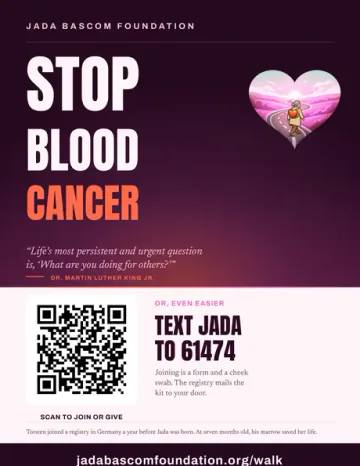
That regeneration is the quiet fact behind the whole question. When Jada Bascom needed a transplant at seven months old, the marrow that saved her came from Torsten Huber, a stranger five thousand miles away in Germany. He recovered. His body replaced what he gave. And a baby got a second chance. If the pain itself is your main concern rather than the recovery timeline, the honest breakdown lives on our page on whether donation hurts.
Questions
Frequently asked questions
How long does it take to recover from donating bone marrow?
It depends on the method. NMDP reports that most PBSC donors return to work, school, and regular activities within one to seven days. NMDP reports a median time to full PBSC recovery of seven days. Marrow-harvest donors typically return within two to seven days, with a median time to full recovery of about 20 days. The Mayo Clinic notes full recovery after marrow harvest can take a couple of weeks.
How long does it take to recover from a PBSC donation?
Most PBSC donors are back to normal activities within one to seven days, according to NMDP. The mild flu-like aching from the filgrastim injections usually improves shortly after donation, though recovery time varies, and some donors report mild fatigue for a few days afterward. Recovery is mainly about resting and letting the aches settle. Follow your donor team's guidance on caring for the collection sites.
How long does it take to recover after a bone marrow harvest?
Most marrow-harvest donors return to their regular activities within two to seven days, with soreness in the lower back or hip area that is often compared to a hard workout. NMDP reports a median time to full recovery of about 20 days, and the Mayo Clinic notes full recovery can take a couple of weeks. The soreness is managed with over-the-counter medication for most donors, though some receive a brief prescription.
How much time off work do I need to donate bone marrow?
Plan for the donation day plus a short recovery window. PBSC donors often need only a day or two off and many return within a week, while marrow-harvest donors usually take a few days and may want longer if their work is physical. The exact amount varies by person and by method, so it is reasonable to plan for up to a week and adjust with your medical team's guidance.
Does your bone marrow grow back after donating?
Yes. The National Cancer Institute explains that your body replaces the bone marrow you donate, and your blood-forming stem cells return to their baseline level on their own. You are left with no lasting deficit, and your long-term blood and immune function are not reduced. This regeneration is also why a second donation is medically possible later.
When will I feel normal again after donating bone marrow?
Most PBSC donors feel back to themselves within a few days to a week as the filgrastim aches fade and any mild fatigue lifts. Marrow-harvest donors usually feel the soreness ease over several days. NMDP reports a median full recovery of about 20 days; individual recovery varies, and the donor team guides return to heavier activity. The Mayo Clinic notes that it may take a couple of weeks before a donor feels fully recovered.
What should I plan for during recovery after donating?
Plan for rest, an over-the-counter pain reliever your team approves, and a ride home if you would rather not drive after the collection day. PBSC donors mainly need to manage mild aches and fatigue, while marrow-harvest donors should ease back into physical activity and avoid heavy lifting for a few days. Staying hydrated and keeping any follow-up check-in your registry schedules rounds out a typical recovery.
Is recovery from PBSC easier than from a marrow harvest?
For most donors, yes — PBSC collects stem cells from the bloodstream, and most donors return to activities within one to seven days. A marrow harvest involves a few days of lower-back or hip soreness and a median full recovery of about 20 days per NMDP. Both recoveries are short and well-tolerated, and PBSC is generally the quicker of the two. NMDP, the U.S. registry, says about 90% of its donors give by PBSC; the patient's doctor chooses the method.
Are there any long-term effects after donating bone marrow?
Long-term follow-up data are reassuring. Large NMDP donor studies have not found a pattern of long-term harm, and the National Cancer Institute notes the body replaces the bone marrow you donate. Recovery timing varies by person and method; NMDP reports median full recovery of seven days after PBSC and 20 days after marrow donation.
What to do next
- Wondering about the pain itself? Does bone marrow donation hurt?
- Want the step-by-step process? How bone marrow donation works
- Not sure if you qualify? Can I donate bone marrow?
- Ready to sign up? Find your bone marrow registry
- Looking for recovery after receiving a transplant? Recovery after a bone marrow transplant, for patients and families
Be Someone's Torsten
You now know what recovery can look like for each donation method. Find the official registry serving your country to review its enrollment process; you are only contacted about donation if you may match a patient, and you can ask questions before deciding.
Enrollment and donor-care details vary by registry • Joining is not donating

Sources reviewed
The claims on this page are drawn from the following donor-facing and medical sources.
- NMDP — PBSC Donation
- NMDP — After Donation
- NMDP — Bone Marrow Donation
- NMDP — Donor FAQs
- NMDP — You’re a Match donor guide
- NCI — Donating Blood Stem Cells
- Mayo Clinic — Blood and Bone Marrow Stem Cell Donation
- Cleveland Clinic — Blood Stem Cell Donation
- Fred Hutch — Finding or Becoming a Donor
- HRSA C.W. Bill Young Cell Transplantation Program