Jada Bascom Foundation
Back to News
Events

The Marrow Walk Live: the Route, the Seven Hubs, and How to Walk a Day

By Jay Womack MSITM
August 5, 2026
4 min read
Stylized aerial illustration of a long coastal inlet with an amber walking path tracing the shore, two dashed water crossings and seven glowing waypoints

In 2009, Jeana Moore laced up her walking shoes in Seattle and started east. Fifteen months and 4,434 miles later she reached New York City, averaging 12 miles a day. In 2012 she walked Sea to Sea Europe — more than 1,000 miles in 137 days, from the Baltic to the Adriatic, through Germany, Switzerland and Italy. Part of that walk she did alongside Torsten Huber, the man whose marrow saved her granddaughter.

On September 1 she starts again. This one is shorter and much denser.

The route

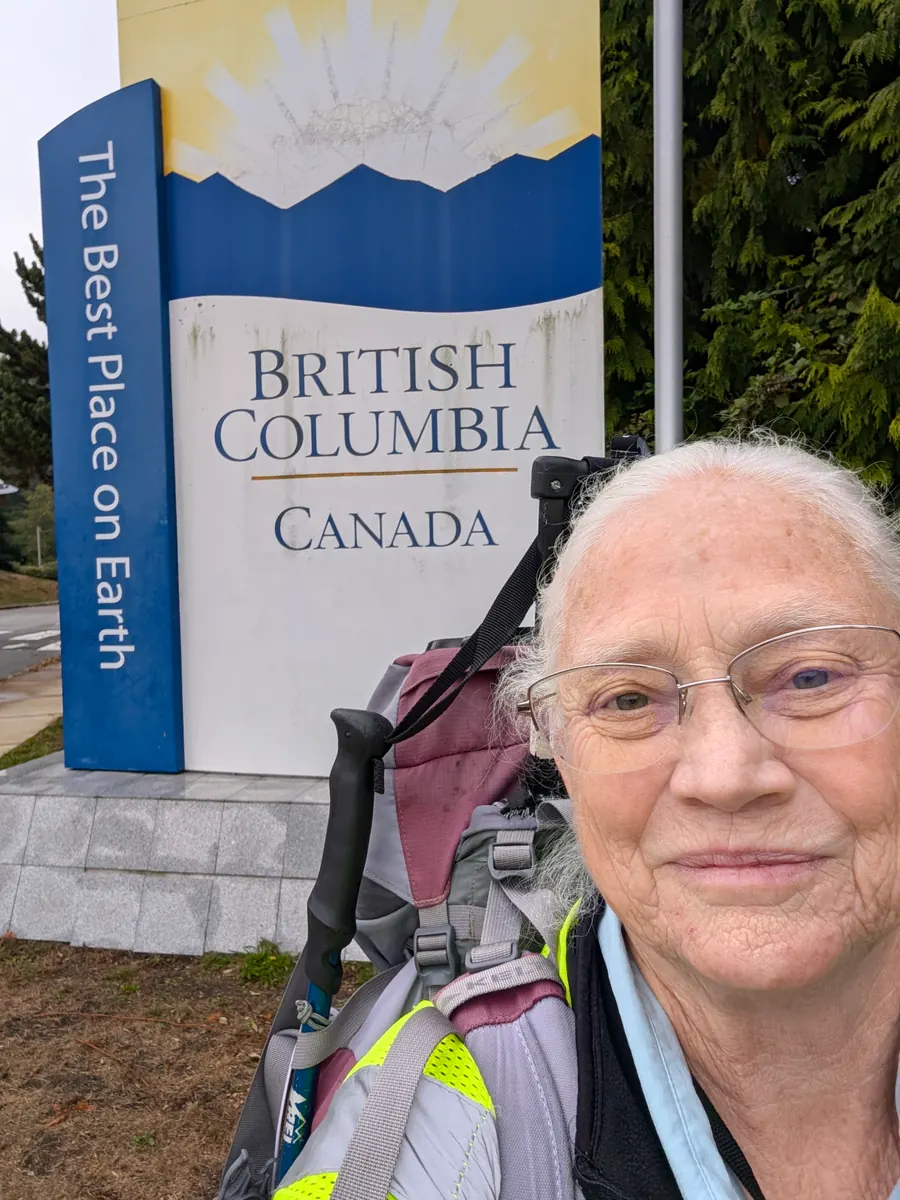
Seattle to Victoria, British Columbia. About 231 miles over roughly 20 days, on foot the entire way except for two ferry crossings and one border crossing made on foot.

It starts in the Fred Hutchinson Cancer Center corridor in Seattle, which is not sentimental geography. Fred Hutch is where E. Donnall Thomas developed bone marrow transplantation, work that earned the Nobel Prize in Physiology or Medicine in 1990. Every transplant discussed on this website descends from what happened on those blocks.

It passes Vancouver General Hospital at 899 West 12th, home of the Leukemia/BMT Program of British Columbia, which serves adults across BC and Yukon. It ends at the British Columbia Legislature in Victoria, near BC Cancer – Victoria.

Between those points: the Peace Arch pedestrian crossing at Blaine, which is open around the clock and free to cross on foot with a passport, and two BC Ferries runs — Horseshoe Bay to Departure Bay, and Mill Bay to Brentwood Bay. The Mill Bay ferry exists in this plan for a specific reason. The direct road route over the Malahat has highway speeds and effectively no shoulder, and walking it would be genuinely dangerous.

The seven hubs

Every three or four days the walk stops in a hub town and holds a registry event. The hubs were not chosen for size.

  1. Tulalip / Marysville — the Tulalip Tribes. Native and Indigenous donors are among the most underrepresented on both national registries.
  2. Bellingham — Western Washington University, plus PeaceHealth St. Joseph Cancer Center.
  3. White Rock / Peace Arch — the first Canadian stop, held as a binational event.
  4. Vancouver / VGH — the Leukemia/BMT Program of BC, a deeply diverse city, and UBC. The mainland finish.
  5. Nanaimo — the island launch, with Nanaimo Regional General Hospital and Vancouver Island University.
  6. Duncan / Cowichan — Cowichan Tribes, the largest First Nation in British Columbia.
  7. Victoria — BC Cancer – Victoria, Royal Jubilee, and the University of Victoria. The finish.

Campuses and First Nations communities are on this list for the same reason: HLA markers are inherited, registries can only match patients to donors they hold, and young donors are the ones registries can use longest.

Two countries, one ask

The walk crosses a border, which means it crosses registries. In the United States that is NMDP, which joins people aged 18 to 40 free. In Canada it is the Canadian Blood Services Stem Cell Registry, which joins people aged 17 to 35.

The ask does not change at the border, only the address does. If you are reading this from somewhere else entirely, find the registry that serves your country.

How it is being done

No paid lodging. The whole walk rests on hospitality — parish halls, community centers, temples and gurdwaras, Salvation Army posts. The framing is deliberate and borrowed from the Buddhist idea of dana, generosity both given and received. Beyond food, the only fixed costs are two ferry fares.

That is not a fundraising gimmick. It is what makes a 20-day walk possible for a foundation this small.

How to help

Three things are genuinely useful.

Walk a day. Any single leg. Most days run 8 to 17 miles between towns, and the company matters more than the mileage.

Offer a room or a hall. If you know a congregation, community hall or fire station along the corridor between Everett and Victoria that might host an evening or a night, that is the single most valuable thing you can offer.

Tell your town she is coming. A registry event works when local people already know about it. A post in a community group two weeks ahead does more than a poster on the day.

Get in touch through the volunteer page.

We are still confirming hosts town by town, and we are not publishing any venue or host name until the people involved have agreed to it. Locations on the event listings are town-level for now, and they will get more specific as they are confirmed.

Steps to MarrowThe Marrow Walk LiveEventsJeana Moore

Share this story

Help spread awareness about bone marrow donation by sharing this article.

Written by

Jay Womack MSITM

Share this Article

Have a story to share?

We love hearing from our community. Reach out if you have news.

Contact Us →

Walk a day, or host an evening

The walk needs people more than it needs money: company on the road, a hall for an evening, a town that knows she is coming.

Get involved with the walk