Start · Scheduled earlier
Start — Fred Hutch at UW Medical Center, Seattle
Fred Hutch at UW Medical Center – Montlake, Seattle, Washington
A Seattle start with a history beyond this campus
This day on the route
- Planned date
- The day
- Walking departure
- Planned walking
- 0 miles
Start marker: no planned walking miles. The walk set off from here on September 7, 2026, and the first walking day was planned from Montlake to Ridgecrest, Shoreline. Fred Hutch and UW Medicine were not walk hosts.
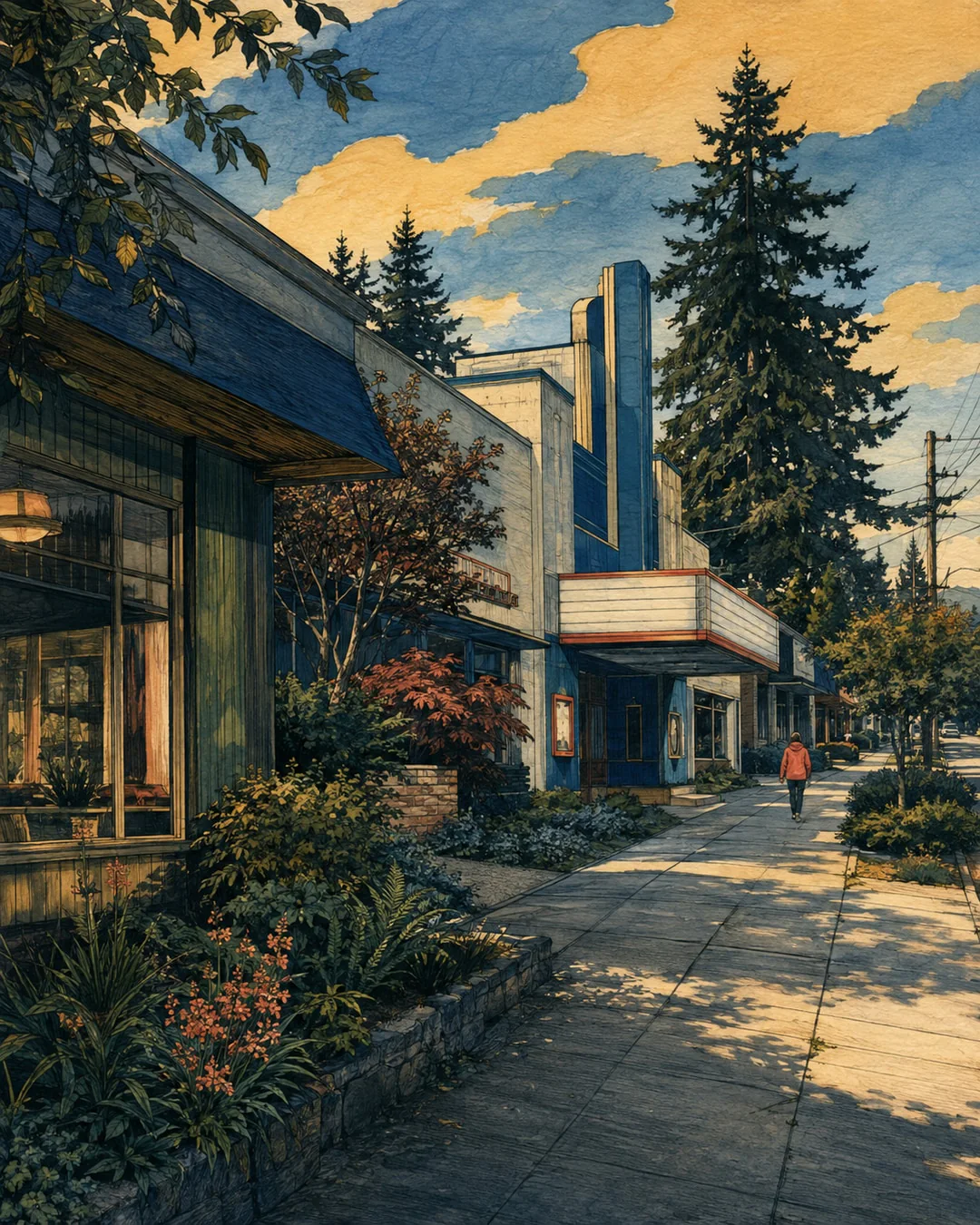
The walk started at Fred Hutch at UW Medical Center–Montlake on September 7, 2026. Seattle’s transplant history gives the opening chapter its context, but the work began well before this hospital became part of that story.
Fred Hutch at UW Medical Center–Montlake was the starting point for Steps to Marrow 5, which set off on September 7, 2026. From Seattle, the itinerary heads north to Shoreline before continuing around the Salish Sea. The contemporary care location stands within a city closely associated with the development of marrow transplantation, a history reaching back to earlier institutions and another coast.
E. Donnall Thomas began his work at the Mary Imogene Bassett Hospital in Cooperstown, New York, in 1955. An early clinical paper followed in 1957. When he moved to Seattle in 1963, his team worked at the Public Health Hospital. Fred Hutch opened its original center in the First Hill neighborhood in 1975. The treatment emerged through years of research across several institutions, with teams building on earlier clinical and laboratory work.
Fred Hutch’s timeline records a landmark in 1979: a successful marrow transplant from an unrelated donor for a patient with leukemia. NMDP traces its own origins to that patient, Laura Graves, and the advocacy of her parents, Sherry and Robert. Their effort helped establish a national program that facilitated its first transplant in December 1987. Thomas shared the 1990 Nobel Prize in Physiology or Medicine.
Jeana Moore’s reason for walking is her granddaughter Jada. The foundation’s account records a leukemia diagnosis at one month old and a transplant at seven months, using marrow from Torsten Huber in Germany. He had joined the registry at a donor drive in southern Germany about a year before Jada was born. Their story follows a family’s search across an ocean and the relationship that grew from the donation.
Choose where you live
Continue to the official registry that serves you. It decides eligibility, handles registration and contacts you if you may match a patient.
United States — NMDP
NMDP accepts new registry members who are 18 to 35, live in the US, its territories or freely associated states, can meet NMDP’s health guidelines, and are not already registered through another US organization. Joining happens at home: you answer a few questions on NMDP’s site, they mail you a free cheek-swab kit, and you swab and send it back. Once you are a member you stay listed until you are 61 unless you ask to be removed — 61 is when NMDP takes you off, not an age at which you can join. NMDP makes the final eligibility decision.
Check the listed age range
NMDP — Join the registry · checked Sep 1, 2026
Prefer to text? Send JADA to 61474 and NMDP will take it from there.
Browse all official registry options
Eligibility rules can change. Confirm the current requirements with the official registry before joining.
Give to the Jada Bascom Foundation
Choose a symbolic amount or enter your own in Givebutter. Your donation supports JBF’s work wherever it is needed most.
Sponsoring a mile, a day or a stop is a way of describing a gift to the Jada Bascom Foundation. It does not purchase anything on the route.
$100.00 is a suggested amount. Confirm or change it in Givebutter.
Sources
Local history and background reading for this stop.
- History of Fred Hutch — checked Sep 5, 2026
- A pioneering paper turns 50 — checked Sep 5, 2026
- Our history — checked Sep 5, 2026
- Jada, Torsten and the reason for the walk — checked Sep 25, 2026