Day 17 · Planned
North Delta
City of Delta, British Columbia
North Delta and the communities along the Fraser
This day on the route
- Planned date
- The day
- Walking
- Planned walking
- 11 miles
Day 17: 11 planned walking miles from Elgin to North Delta. Day 18 is the planned North Delta Awareness Day.
Route overview, not turn-by-turn directions.
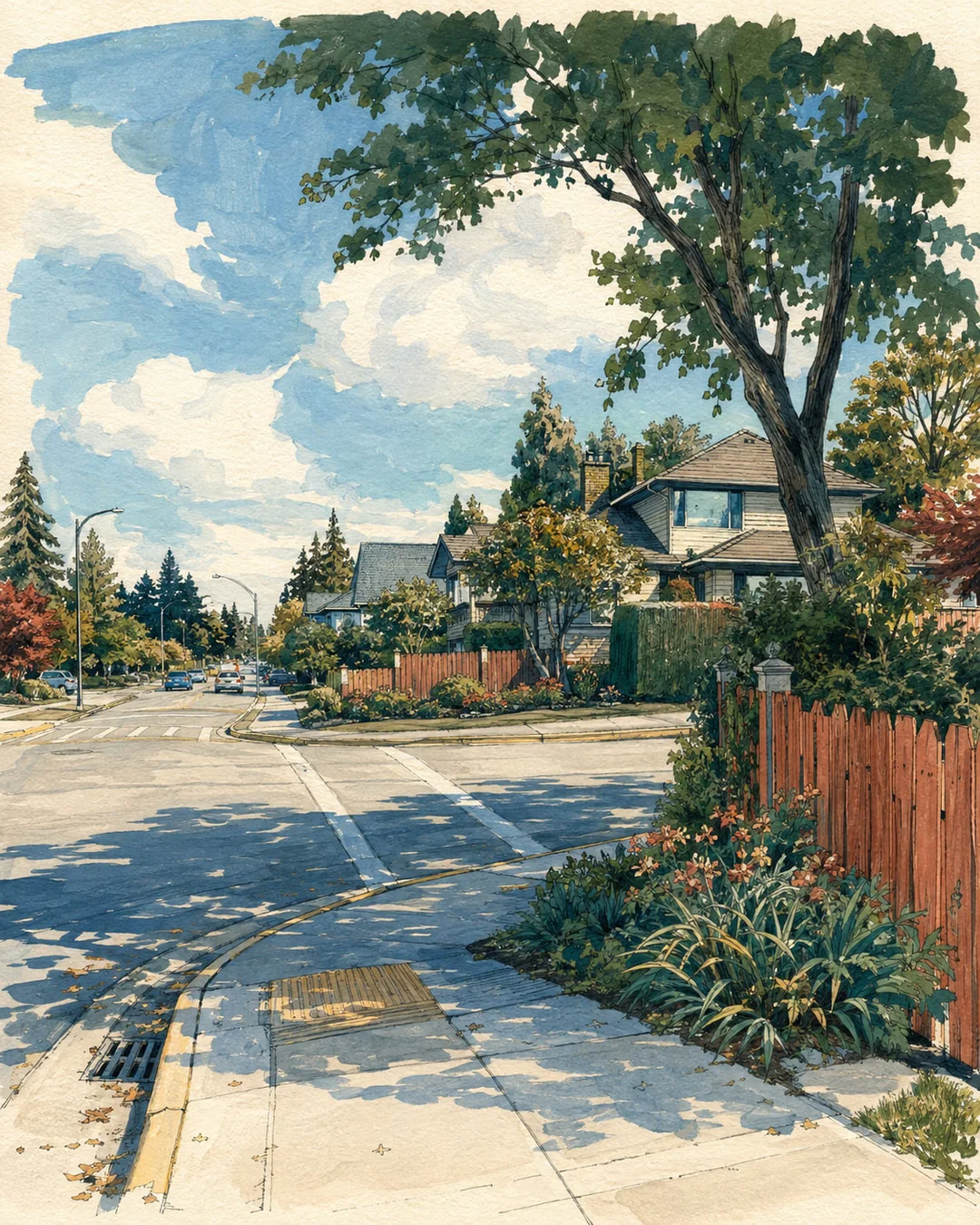
Day 17 is planned as 11 miles to North Delta, one of Delta’s three communities. The city’s river and agricultural history adds context to this suburban stage.
North Delta shares its municipality with Ladner and Tsawwassen. The City of Delta’s history follows a landscape shaped by the Fraser River, farming and fishing, with incorporation in 1879. The three communities belong to one city but have distinct settings: North Delta on the northern side, Ladner near the river and Tsawwassen toward Boundary Bay and the Strait of Georgia.
The city records early commercial salmon canning near Annieville and the establishment of a cannery on Deas Island in 1873. Agriculture remains an important part of Delta’s land use. These histories give the route through the municipality a connection to the river beyond the visible roads and residential streets.
The itinerary assigns 11 planned walking miles from Elgin to North Delta, followed by an Awareness Day. It later returns through Delta’s Tilbury and Tsawwassen areas on the approach to the ferry. This first visit and that later return show why the route is a loop around the Salish Sea rather than a single northbound line.
Choose where you live
Continue to the official registry that serves you. It decides eligibility, handles registration and contacts you if you may match a patient.
Where in Canada?
Canada outside Québec — Canadian Blood Services
The Canadian Blood Services Stem Cell Registry asks for people aged 17 to 35 in good general health. You answer eligibility questions online, complete a profile and sign a consent form; a cheek-swab kit arrives in the mail within one to three weeks for you to swab and return. If you live in Québec, you register with Héma-Québec instead. Canadian Blood Services makes the final eligibility decision.
Check the listed age range
Browse all official registry options
Eligibility rules can change. Confirm the current requirements with the official registry before joining.
Give to the Jada Bascom Foundation
Choose a symbolic amount or enter your own in Givebutter. Your donation supports JBF’s work wherever it is needed most.
Sponsoring a mile, a day or a stop is a way of describing a gift to the Jada Bascom Foundation. It does not purchase anything on the route.
$100.00 is a suggested amount. Confirm or change it in Givebutter.
Sources
Local history and background reading for this stop.
- About Delta — checked Sep 5, 2026