In Loving Memory
Roy Chelsen
FDNY Engine 28 · 1959–2011
“I want to get out of this building.” — Roy Chelsen, FDNY oral history

The way out
In the lobby of the World Trade Center’s North Tower, Roy Chelsen wanted his company to leave. The South Tower had fallen. On their descent, he and other firefighters had helped lead civilians down dark, smoky stairs. Now his officer wanted to stay near the former command post.
“Lou, I’m going to get out. I want to get out of this building,” Chelsen recalled telling him in his January 18, 2002, interview with the Fire Department’s World Trade Center Task Force.
He proposed a route along a brick wall, beneath a pedestrian bridge and onto West Street. Engine 28 got out. When the North Tower began to collapse, he ran up West Street and ended up on the ground. He could not breathe; his mask was still upstairs. Another firefighter helped him with a mask, and they walked out together.
Earlier that morning, Chelsen had climbed to roughly the 29th or 30th floor. In his account, the power failed, he heard a prolonged rumbling, and a chief ordered an evacuation. On the way down, he learned that the South Tower was gone. Before the interview ended, he added that he had also warned firefighters from Ladder 18 to leave, and they had come with his group.
The man at Engine 28
Chelsen joined the FDNY in April 1985. His working life centered on Engine 28, in the East Second Street firehouse it shared with Ladder 11. Ladder 11 lost six men on September 11: Lieutenant Michael Quilty and firefighters Michael Cammarata, Edward Day, John Heffernan, Richard Kelly Jr. and Matthew Rogan.
Kevin Murray, a Ladder 11 firefighter assigned to Ladder 18 that day, credited Chelsen with getting him out of the North Tower. They had worked alongside each other for eight years. In reporting on Chelsen’s death, The New York Times quoted Stephen J. Cassidy, then president of the Uniformed Firefighters Association: “There are a lot of firefighters alive today because of him.”
His colleagues also remembered the life between alarms. Peter Gleason recalled Chelsen riding his Harley to work even in winter and picking him up near the Astor Place subway stop. Murray remembered a motorcycle painted with the number 343. When people asked about it, Chelsen explained that it stood for the firefighters killed at the World Trade Center.
At home in Warwick, New York, he was a husband to Trish and a father to Christopher. His obituary recorded his volunteer work with Sports for Health. There was more to his life than the day for which strangers knew his name.
Looking for a donor
In December 2005, Chelsen was diagnosed with multiple myeloma, a cancer of plasma cells in the bone marrow. He was 46. He retired from the FDNY in December 2006 on a World Trade Center disability pension. Reporting his death, The New York Times said the department and his family linked his illness to his service on September 11 and his subsequent work searching the rubble for colleagues.
Treatment brought a remission, but the cancer returned in 2008. He needed a transplant from a donor. His family’s foundation dated the start of the search to June of that year.
The search brought setbacks. NBC News later reported that a matching donor identified in 2009 withdrew shortly before a planned transplant. The family was not told why.
In September 2010, Be The Match, the program run by the National Marrow Donor Program, reported that Chelsen still had no donor match in his family or its registry. The firefighter who had urged others out of the North Tower was asking the public to help him find one.
On December 8, the registry published an update: a matching donor had been found, Chelsen had received his transplant, and he was in a critical period of recovery. “Things were looking good,” his Engine 28 colleague Terrence Mulholland later told The Local East Village.
Chelsen died at home in Warwick on January 9, 2011. He was 51. Family and fellow firefighters were with him. Murray was among the friends who visited before he died.
The work that continued
His family’s foundation, Be the Hero for a Hero, organized donor drives and promoted the marrow registry. His obituary asked that memorial donations go to that foundation. In 2012, his sister Joan was still speaking publicly about the donor search, in an NBC News report on whether donors should be paid.
Gleason remembered how Chelsen had drawn attention to the New York Blood Center and helped its donor-recruitment efforts. “That’s the legacy Roy is leaving behind,” he told The Local East Village.
Chelsen had spent his career answering calls for help. During his illness, he and the people around him asked the public to consider answering one, too. That work outlived him.
Learning about donation
Joining an official registry is a voluntary decision to be considered as a potential donor. If you may be a match, the registry explains the next steps and asks for your consent. You can ask questions and change your mind. Keeping your contact details current helps the registry reach you.
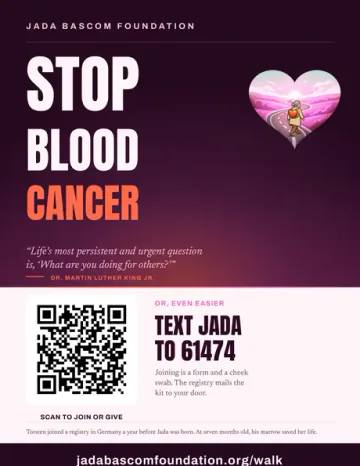
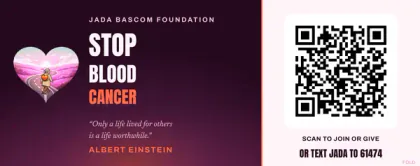
The Jada Bascom Foundation helps people learn about donation and find the official registry that serves their country. The registry determines eligibility and coordinates donation. Learning what is involved is the place to begin.
Reporting and sources
The September 11 account draws chiefly on Chelsen’s FDNY oral-history transcript, supplemented by reporting from colleagues who knew him. The transplant chronology follows the registry’s contemporary September and December 2010 reports. Later accounts contain conflicting timing details; no exact transplant date or reason for a donor’s withdrawal is established here.
FDNY: Roy Chelsen’s oral-history interview, January 18, 2002 (file 9110475, pages 2–10).
Al Baker, The New York Times; republished by The Boston Globe, January 15, 2011.
Suzanne Rozdeba, The Local East Village, January 10, 2011 (archived).
FDNY: memorial roster in its 2021 World Trade Center Health Program report (page 111).
Roy Chelsen’s family obituary, Lazear-Smith & Vander Plaat, January 11, 2011.
Be the Hero for a Hero: the family’s foundation and donor appeal (2011 archive).
Be The Match: update confirming the transplant, December 8, 2010 (archived).
Be The Match: the donor appeal, September 10, 2010 (archived).
NBC News: reporting on donor compensation and the Chelsen family, June 13, 2012 (archived).
Duluth Fire Department: donor-drive announcement and diagnosis history, April 8, 2010.
National Cancer Institute: multiple myeloma.
NMDP: joining the registry, staying in contact and the donation process.
More Stories


Inspired by Roy Chelsen?
Learn about joining your registry
JBF will point you to the official registry serving your country. That registry sets its enrollment method, timing, cost, sampling, and eligibility rules.