The sibling-match surprise
Are siblings always a match for bone marrow?
No. A full sibling has only about a 25% chance — roughly 1 in 4 — of being a complete HLA match, because tissue-matching genes are inherited together in sets. That is why, according to NMDP, 75% of patients do not have a fully matched donor in their own family.
The official registry serving your country explains its current enrollment process • Joining is separate from donation
Last updated
The quick answer
No. A full brother or sister has only about a 25% chance — roughly 1 in 4 — of being a complete HLA match for you. That is because the genes that control tissue matching are inherited together in sets, and each sibling draws a different combination from the same two parents.
Because the odds inside a family are that low, NMDP says 75% of patients do not have a fully matched donor in their own family. Many depend on a stranger from the public registry. That is the entire reason the registry exists, and why one more registrant can matter so much.
Joining your official registry is different from donation for a specific family member. The registry explains its enrollment method and health form, then may contact you about donation if you turn out to be a possible match for a patient. You can ask questions and decline before donation.
You can likely donate if
If you have ever assumed a patient's family would simply provide the match, this is the page that corrects it — most of the time, they cannot.
Needs a closer look if
Exact match rates and registry rules vary by country and by family; the figures here are the typical US and worldwide guidance.
The official registry serving your country explains its current enrollment process • Joining is separate from donation
In detail
Why a sibling is only about a 1-in-4 match

The reason comes down to how tissue type is inherited. The genes that control HLA matching — the markers your immune system uses to tell your own cells from foreign ones — sit close together on the same chromosome and are passed down as a block, called a haplotype. You inherit one haplotype from your mother and one from your father. The National Cancer Institute explains that HLA matching between donor and recipient is what determines compatibility for a transplant, and that a close match lowers the risk of complications.
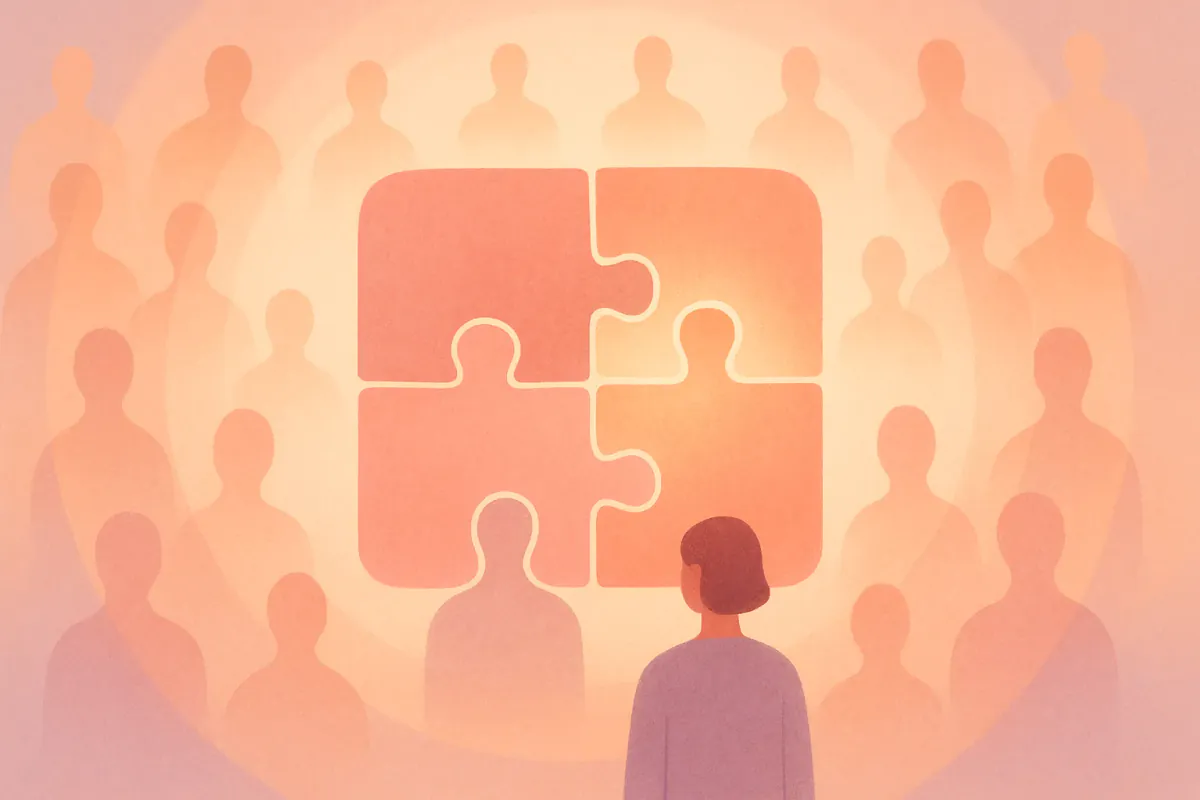
Each parent has two haplotypes and passes one of them to each child. That gives four possible combinations a child can inherit. Two full siblings are a complete match only when they happen to draw the same combination from the same two parents — and the math on that works out to about 1 in 4. The same logic means there is roughly a 1-in-4 chance two siblings share no haplotype at all, and a 1-in-2 chance they share exactly one. A study in Biology of Blood and Marrow Transplantation, indexed on PubMed by the National Library of Medicine, modeled these sibling-match probabilities and what they mean for how often patients need an unrelated donor instead.
This is why having more siblings raises a patient's overall odds — each additional brother or sister is another roughly 1-in-4 chance — but never guarantees a match. A patient with one sibling has a single roll of those dice. A patient with no siblings has none. And families today are often smaller than they once were, which leaves more patients looking outside the family than in generations past.
Why 75% of patients have no full family match
Put the sibling odds together with the reality of family size and the picture becomes clear: a family match is the exception, not the rule. According to NMDP, the US registry, 75% of patients do not have a fully matched donor in their own family. Many of them depend on someone unrelated.
That is precisely the gap the public registry is built to close. When no relative matches, the transplant team searches a worldwide pool of volunteers enrolled through their registries, with HLA information recorded under each registry's current process. The Fred Hutchinson Cancer Center — the institution where modern bone marrow transplantation was pioneered — describes how a transplant relies on matching the donor and recipient's tissue type, and how the team searches international registries for an unrelated volunteer donor when no family match exists.
A patient's best unrelated match is most often someone of similar ancestry, because HLA types cluster within ancestral backgrounds. That is why registries in many countries recruit broadly and why the worldwide pool, coordinated across registries as the WMDA Global Trends Report 2024 describes, matters so much. The more people from more backgrounds who register, the more of those patients find their match.
Jada had no family match. Torsten was a stranger.
This is not an abstract statistic for the Jada Bascom Foundation. Jada Bascom was diagnosed with acute myeloid leukemia at one month old. Like 75% of patients, she had no fully matched donor in her own family. Her only hope lay somewhere among the millions of strangers registered as potential donors around the world.
Five thousand miles away in Germany, a young man named Torsten Huber had joined DKMS, the German registry, at a donor drive held in April 2006 for a woman in his area who had leukemia. He turned out to be Jada's match. She received her transplant at seven months old. Today, she is a healthy young woman — cancer-free and thriving. In his own words: "Of course I registered to help somebody. I'm really glad that I could help Jada."
Torsten was a stranger when he joined the registry. He had no idea a baby on another continent would one day depend on that decision. That is what the registry makes possible — and it is why a sibling-match statistic, of all things, leads straight to the most important point on this page: the patients who do not have a family match need you.
Joining the registry is not donating
If the gap above moves you to act, it helps to know exactly what registering involves. The official registry serving your country sets its enrollment method, sample collection, timing, cost, kit, mailing, and health-history requirements. It explains those current requirements before you enroll.
You are added to that registry's pool only after its own enrollment process is complete, and the registry may contact you about donation if you turn out to be a possible match for a specific patient. If that day ever comes, there is a second, more detailed health screening, and you can ask every question you have and still decline before donation. Our page on who can donate bone marrow walks through general eligibility, which the registry confirms from the health history you provide.
Registration ages, costs, and enrollment procedures vary by country and registry. Check the official registry serving you for its current rules and for any kit or mailing instructions.
Questions
Frequently asked questions
Are siblings always a match for bone marrow?
No. A full sibling has only about a 25% chance, roughly 1 in 4, of being a complete HLA match. Three out of four full siblings, on average, will not be a full match. That is why most patients end up needing a donor from outside the family.
What are the odds a sibling is a bone marrow match?
For each full brother or sister, the odds of a full HLA match are about 1 in 4. The more siblings a patient has, the higher the overall chance that at least one of them matches, but even in large families a match is never guaranteed. A patient with no siblings has no chance of a sibling match at all.
Why is a sibling only a 25% match and not higher?
Tissue-type genes are inherited in sets called haplotypes, one set from each parent. Each child receives one haplotype from the mother and one from the father, and there are four possible combinations. Two siblings match fully only when they happen to inherit the same combination, which works out to about 1 in 4.
Can a half-sibling or cousin be a bone marrow match?
It is much less likely. Half-siblings share only one parent, so they share fewer of the inherited tissue-type genes, and cousins are more distant still. Extended relatives are occasionally tested, but they match far less often than full siblings, which is why the public registry of unrelated donors is so important.
What percentage of patients have no family match?
According to NMDP, the US registry, 75% of patients do not have a fully matched donor in their own family. Many of those patients depend on unrelated donors from the public registry. Jada Bascom was one of them.
Why do patients need an unrelated donor from the registry?
Because a family match is the exception, not the rule. With only about a 25% chance per sibling and most relatives not matching, NMDP says 75% of patients do not have a fully matched donor in their own family. The public registry exists so that a stranger, sometimes on another continent, can be that match.
Do parents match their children for bone marrow?
Usually only halfway. A child inherits one haplotype from each parent, so a parent is typically a half-match rather than a full match. Half-matched, or haploidentical, transplants are used in some cases, but a fully matched donor, related or unrelated, is generally preferred when one can be found.
How does HLA matching decide who can donate?
HLA refers to markers on your cells that the immune system uses to tell self from non-self. A transplant team looks for a donor whose HLA markers closely match the patient's, because a close match lowers the risk of complications. This is explained in plain terms on our page about how HLA matching works.
If my sibling needs a transplant, should I still join the registry?
Getting tested for your own sibling and joining the public registry are two separate things, and both help. Even if you are not a match for your family member, joining the registry means you could be the match a different patient is waiting for. The official registry serving you explains its current enrollment process and may contact you about donation if you turn out to be a possible match.
What to do next
- Want to see the 1-in-4 play out? Why matching is so hard — the interactive story
- Want the science behind the match? How does HLA matching actually work?
- Wondering if you qualify? Who can donate bone marrow?
- Want to see a real unrelated match? Read Torsten and Jada's story
- Ready to register? Find and join your bone marrow registry
Be Someone's Torsten
You now know the real odds: a full sibling has about a one-in-four chance of being a full HLA match, and many patients need an unrelated donor. That gap is filled by strangers who joined the registry. Check the official registry serving your country for its current enrollment process; it may contact you about donation if you turn out to be a possible match for someone waiting.
The official registry serving your country explains its current enrollment process • Joining is separate from donation

Sources reviewed
The claims on this page are drawn from the following donor-facing and medical sources.